
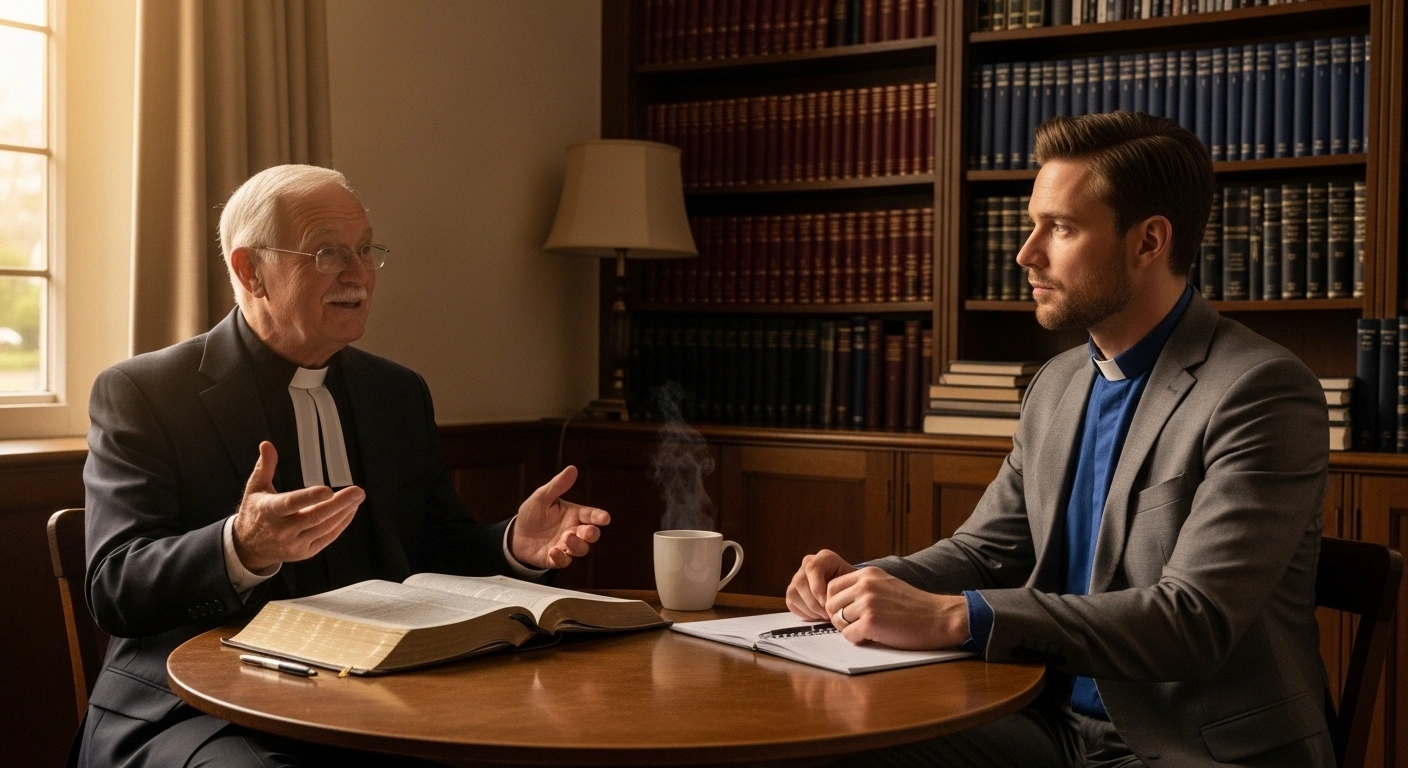
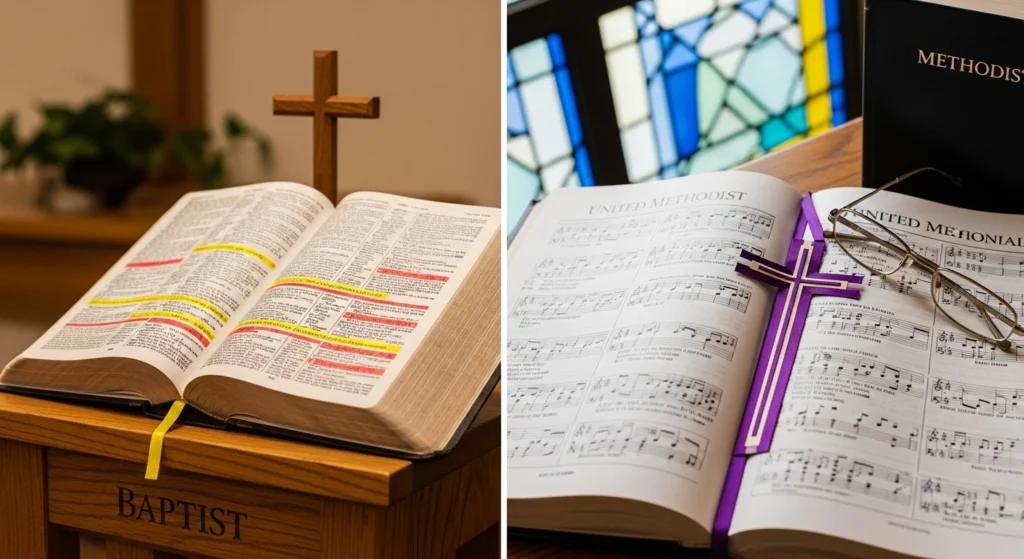
Difference between Baptist and Methodist is an important topic when exploring the diversity within Christianity. Both Baptist and Methodist traditions belong to the wider family of Protestant Christianity, yet they differ in their beliefs, worship practices, and historical development. Understanding the difference between Baptist and Methodist helps readers see how two Christian groups can share similar faith foundations while maintaining distinct theological perspectives.
The difference between Baptist and Methodist is especially visible in areas such as baptism practices, church governance, and theological emphasis. Baptists usually practice believer’s baptism by full immersion and emphasize the independence of each local church. Methodists, on the other hand, traditionally allow infant baptism and often follow a structured church organization connected to the teachings of John Wesley, who played a key role in shaping Methodist theology. Exploring the difference between Baptist and Methodist therefore reveals not only doctrinal distinctions but also different approaches to worship, tradition, and community life.
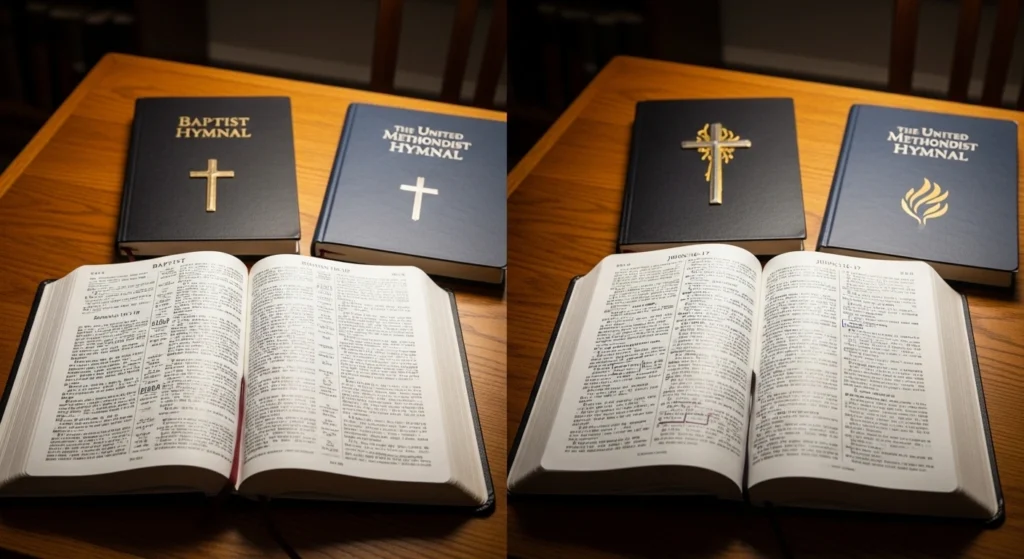
These two denominations, often found across the street from each other in small American towns, share Christian roots but diverge significantly in theology, practice, and governance. Here’s a comprehensive breakdown:
The Baptism Divide (The Signature Difference)
| Aspect | Baptist | Methodist |
|---|---|---|
| Who | Only confessing believers (adults/youth) | Believers AND infants |
| How | Immersion only — full body submersion | Sprinkling, pouring, OR immersion (any mode valid) |
| Meaning | Symbolic public declaration of faith | Sign of regeneration and God’s grace; sacrament of initiation |
| Membership | Usually required for church membership | Not typically required for membership |
Baptists derive their very name from this practice — credo baptism (baptism of believers) by immersion is non-negotiable . Methodists practice paedobaptism (infant baptism), viewing it as the first sacrament of Christian initiation that cleanses original sin .
Church Government: Democracy vs. Hierarchy
Baptist: Congregational Autonomy
- Each local church is independent and self-governing
- Members vote on pastors, budgets, and major decisions
- No bishop or external authority can dictate to a local church
- Pastors are hired by local search committees
Methodist: Connectional/Episcopal
- Hierarchical structure with ascending conferences (Local → District → Annual → General)
- Bishops appoint pastors to churches (pastors rotate every 2-4 years)
- Denomination often owns church property
- Ordination standards set denomination-wide
Salvation Theology: Eternal Security vs. Conditional
| Belief | Baptist | Methodist |
|---|---|---|
| Predestination | Mixed; many are “4-point Calvinists” (moderate) | Arminian — reject predestination; emphasize free will |
| Eternal Security | “Once saved, always saved” — salvation cannot be lost | Conditional security — one can fall away from faith/apostasy |
| Sanctification | Flows from justification | Justification and sanctification work side-by-side |
| Good Works | Important but not salvific | Part of the ongoing salvation process |
Scripture & Authority
- Baptists: Sola scriptura — Bible is the only infallible authority, verbally plenary inspired, inerrant
- Methodists: Prima scriptura — Bible is primary but interpreted through tradition, reason, and experience; generally do not hold to inerrancy
This difference leads Methodists to be more open to modern biblical criticism and evolving interpretations on social issues, while Baptists tend toward more literal and fixed interpretations .
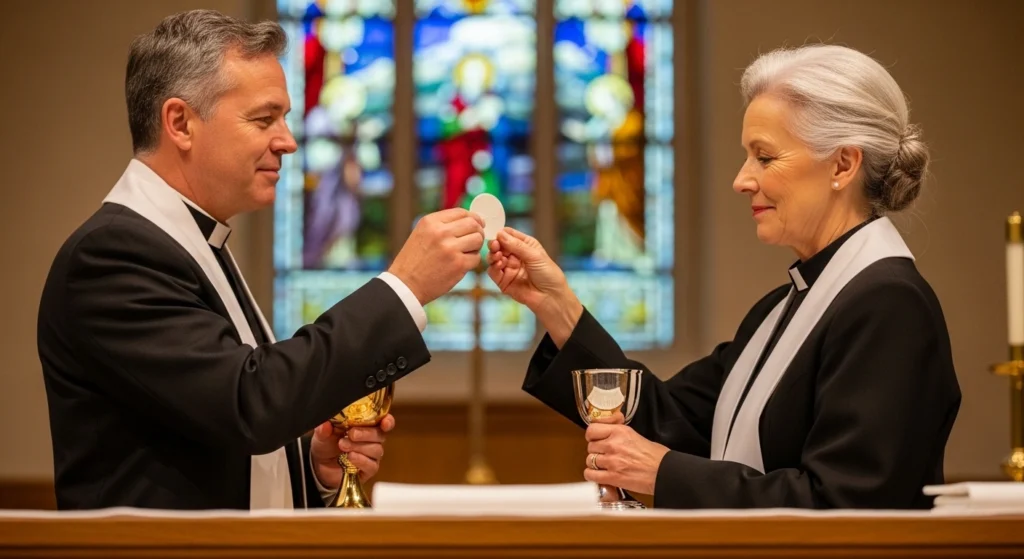
Communion (Eucharist/Lord’s Supper)
| Baptist | Methodist | |
|---|---|---|
| Term | “Ordinance” (memorial) | “Sacrament” |
| View | Symbolic remembrance of Christ’s sacrifice | Means of grace; Real Presence (though not transubstantiation) |
| Participation | Closed/close communion — typically members only | Open communion — all baptized Christians welcome |
Social Issues & Modern Stances
| Issue | General Baptist Stance | General Methodist Stance |
|---|---|---|
| Women pastors | Varies; Southern Baptists generally do not ordain women | Ordain women |
| Alcohol | Most abstain totally | Generally permissible in moderation |
| War/Military service | Support “just wars” | Many are pacifists |
| LGBTQ+ issues | Generally conservative; marriage = man + woman | Varies widely; currently denominational debate |
| Creation | Creationism | Accepts Big Bang/scientific cosmology |
Historical Roots
Baptists emerged from the Anabaptist/Radical Reformation tradition (c. 1609), emphasizing separation of church and state, rejecting infant baptism, and advocating for religious freedom. They were heavily influenced by English separatists like John Smyth and Thomas Helwys .
Methodists trace to John Wesley (1703–1791), an Anglican priest who sought to revive the Church of England through disciplined spiritual practices (“method”). The movement became its own denomination after Wesley’s death, maintaining close ties to Anglican/Lutheran “magisterial” Protestantism .

The Bottom Line
While both are trinitarian, Bible-believing Protestant traditions focused on evangelism, the Baptist tradition emphasizes individual conscience, local autonomy, and believer’s baptism, while Methodism emphasizes sacramental grace, connectional community, and the Wesleyan pursuit of “Christian perfection.”
As one observer noted: “A Methodist is merely a Baptist who can read” — a tongue-in-cheek nod to Methodism’s historical emphasis on education and social action alongside personal faith .
Conclusion
In conclusion, the difference between Baptist and Methodist mainly revolves around their views on baptism, church authority, and theological heritage. Baptists emphasize personal faith and congregational independence, while Methodists maintain a more structured church system and broader baptism practices.
Recognizing the difference between Baptist and Methodist allows readers to appreciate the rich diversity within Christianity. Although their traditions differ in certain beliefs and practices, both denominations share the common goal of following the teachings of Jesus Christ and promoting faith, service, and spiritual growth. Learn more at…

The author is a Ph.D scholar and has keen interest in what is happening around the world. I love to write, travel and observe. Constant zeal for new ideas is a trigger for me. Love, respect and live peacefully