
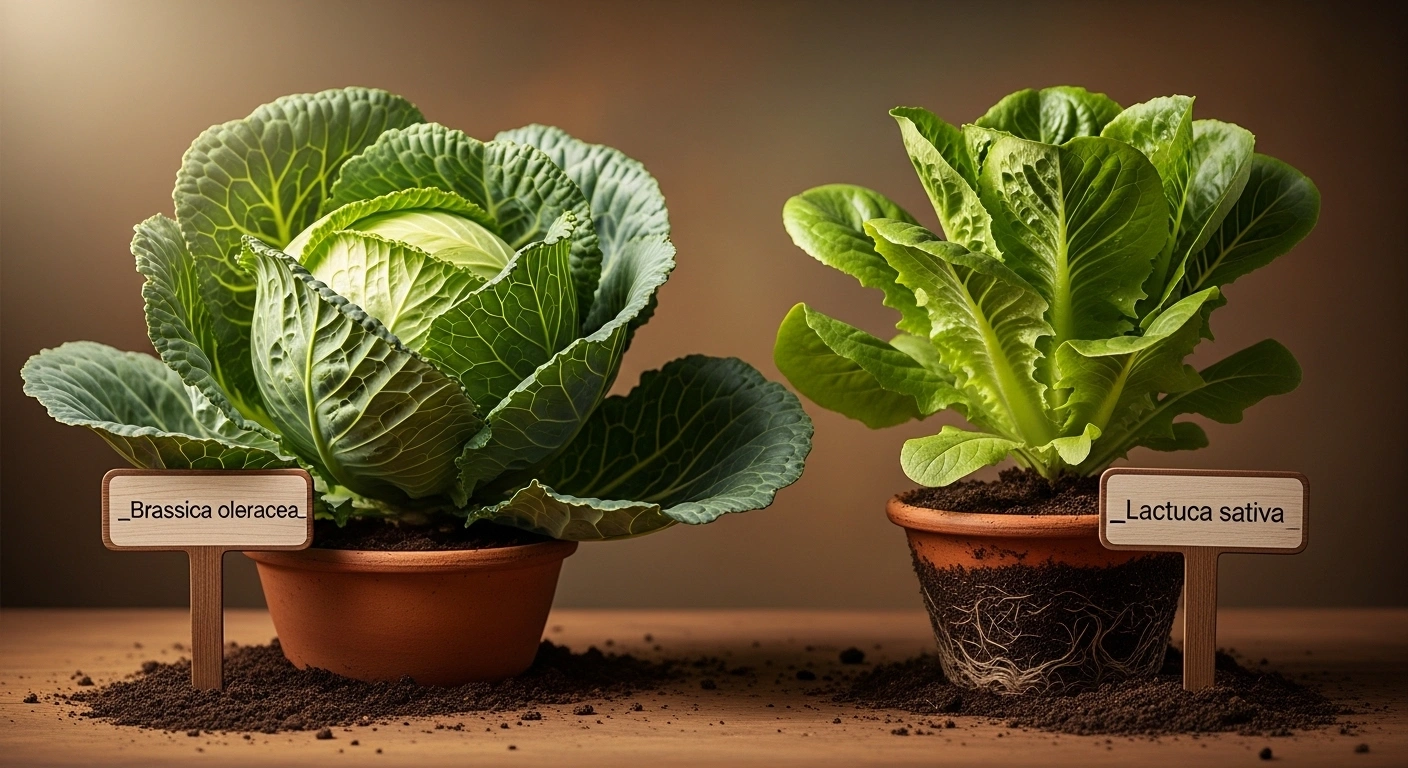
Difference between Cabbage and Lettuce is a common topic for people who love healthy foods, gardening, or culinary exploration. Although both vegetables are leafy greens and often appear similar at first glance, the difference between cabbage and lettuce becomes clear when we look at their texture, flavor, nutritional value, and culinary uses. Cabbage usually forms a dense, compact head with thick leaves, while lettuce tends to be lighter, softer, and more delicate.
Understanding the difference between cabbage and lettuce can help home cooks, nutrition enthusiasts, and gardeners choose the right vegetable for salads, stir-fries, or cooked dishes. From the crisp crunch of cabbage in coleslaw to the tender freshness of lettuce in salads and burgers, each vegetable offers unique characteristics that make it valuable in the kitchen. Learning the difference between cabbage and lettuce also highlights their distinct nutritional profiles, growth patterns, and flavors, making it easier to use them appropriately in everyday meals.
Understand More
You were at the grocery store. Two round, green heads sat side by side. One label read “Green Cabbage.” The other: “Iceberg Lettuce.” They looked like siblings—layered, pale, vaguely spherical. You grabbed one, then hesitated. Were you making coleslaw or a salad? Did it matter?
Here’s the truth that produce departments don’t advertise: Cabbage and lettuce are not related. Not cousins, not distant relatives. They belong to entirely different plant families, evolved on different continents, and serve different nutritional and culinary purposes. Yet their convergent evolution—both forming “head” shapes from layered leaves—has confused humans for centuries.
Part 1: The Taxonomic Truth – Different Families, Different Continents
The Botanical Divorce
| Characteristic | Cabbage | Lettuce |
|---|---|---|
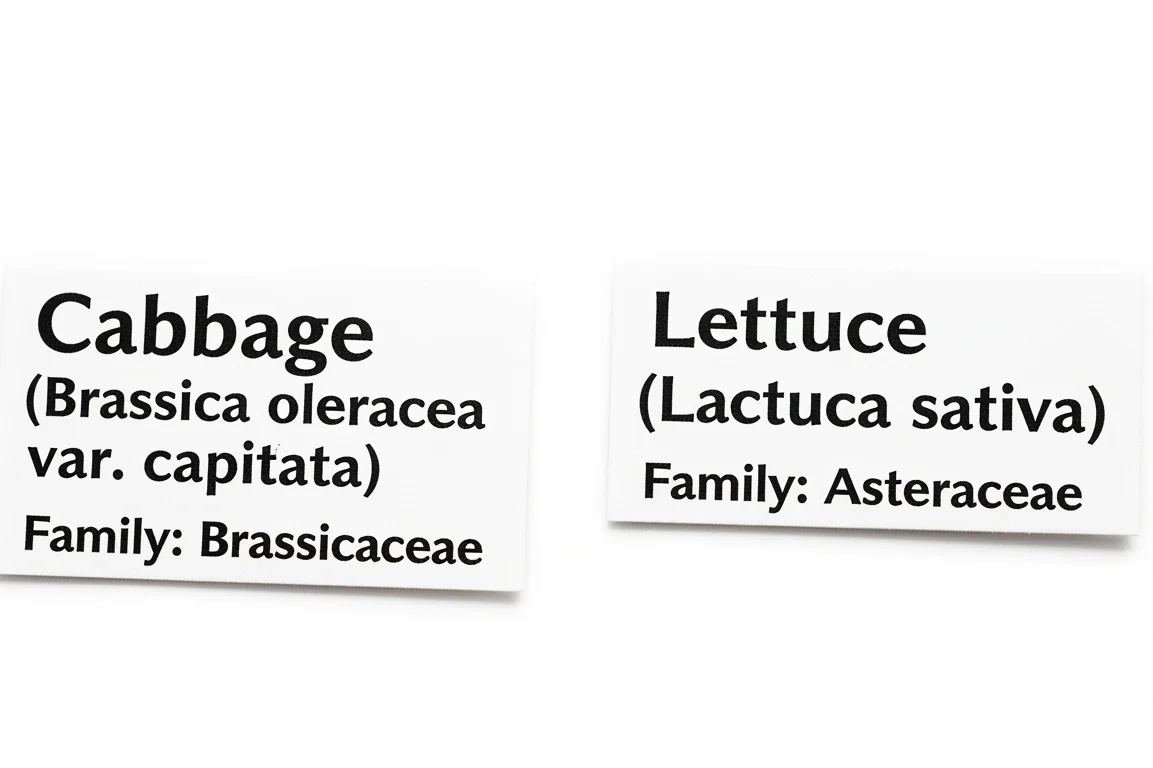
| Scientific name | Brassica oleracea var. capitata | Lactuca sativa |
| Plant family | Brassicaceae (mustard family) | Asteraceae (daisy family) |
| Genus relatives | Broccoli, cauliflower, kale, Brussels sprouts | Sunflowers, daisies, artichokes |
| Origin | Mediterranean/Middle East, ~3000 BC | Egypt, ~5000 BC |
| Life cycle | Biennial (two-year) | Annual (one-year) |
“Lettuce and cabbage are often confused with each other… While both are forms of vegetables, they are different from one another and have different nutrients.” — Quora
The Critical Insight: Cabbage’s closest relatives are pungent, sulfur-rich crucifers (broccoli, mustard, horseradish). Lettuce’s family includes milky-sapped composites (sunflowers, dandelions). They evolved head shapes independently—a botanical phenomenon called convergent evolution, where unrelated species develop similar forms to solve similar problems (in this case, protecting tender inner leaves).
Part 2: The Physical Distinction – How to Tell Them Apart
The Sensory Identification Guide
| Feature | Cabbage | Lettuce |
|---|---|---|
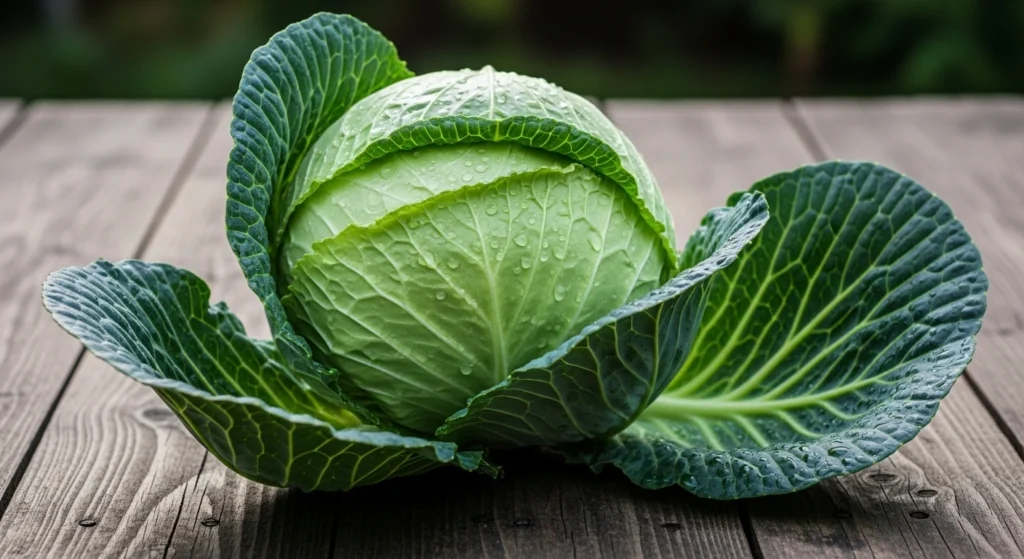
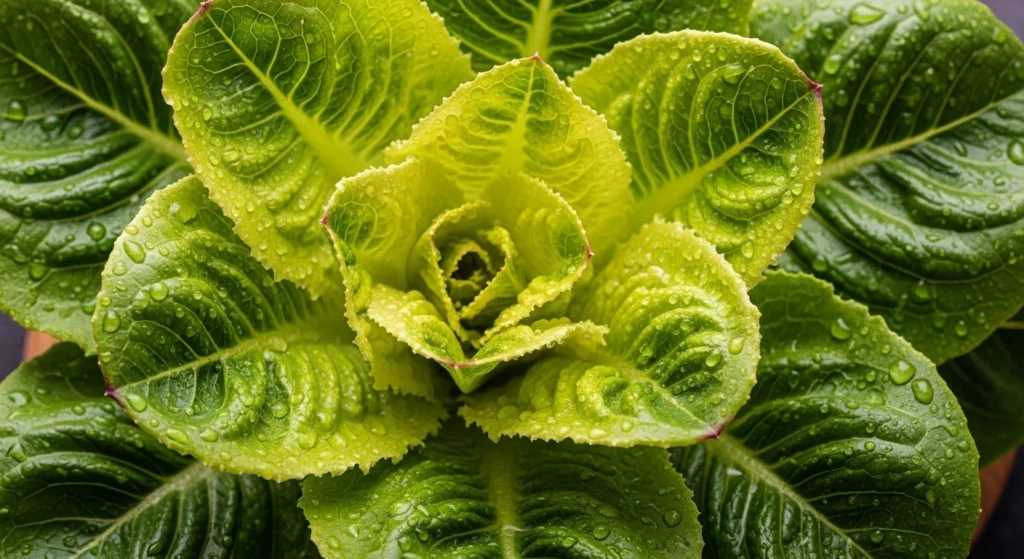
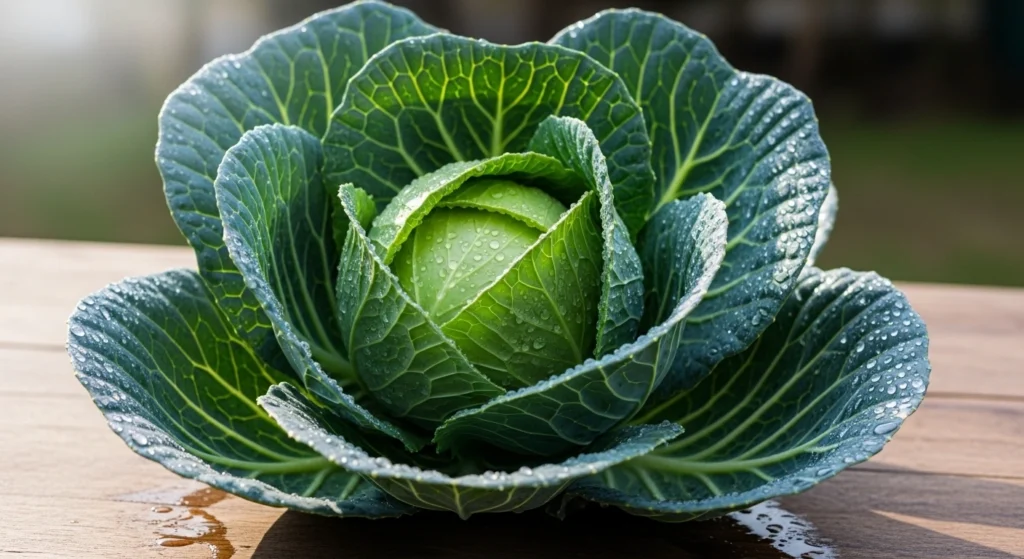
| Leaf texture | Thick, waxy, leathery, almost plastic-like | Thin, tender, delicate, papery |
| Head density | Dense, heavy, compact—like a solid ball | Looser, lighter, springy—leaves separate easily |
| Outer leaves | Tough, inedible, protective (often removed before sale) | Edible, softer, part of the usable product |
| Color depth | Paler green, more white/cream interior | Deeper green (higher chlorophyll) |
| Rib prominence | Thick, raised, white veins | Less pronounced, greener veins |
| Weight | Heavy for size (dense structure) | Light for size (high water content) |
| Sound when squeezed | Crunchy, crackling resistance | Rustling, yielding softness |
The “Finger Test”: Press your thumbnail into a leaf. Cabbage resists, dents slowly, feels rubbery. Lettuce yields immediately, feels moist and fragile.
“Cabbage leaves are thicker, coarser and almost leathery when raw. This is why cabbage leaves are often cooked to make them soft enough to eat. Iceberg lettuce leaves are thinner, smoother and have a higher water content, which is why they become mushy after cooking.” — Science ABC
Part 3: The Water Divide – Why Texture Differs
The Hydration Spectrum
| Vegetable | Water Content | Implication |
|---|---|---|
| Iceberg lettuce | 95.5% | Extremely crisp, cool, refreshing; wilts instantly when heated |
| Leaf lettuce | ~95% | Similar hydration, slightly more nutrients |
| Green cabbage | 92.2% | Substantial, crunchy, holds structure when cooked |
The 3.3% Difference That Changes Everything:
That seemingly small gap in water content creates radically different culinary behaviors:
- Lettuce is essentially structured water—refreshing but nutritionally dilute
- Cabbage has enough dry matter to caramelize, ferment, and develop complex flavors
“Over 95% of iceberg lettuce is water, so while it is not as nutrient-dense as other vegetables, it contains Vitamin K, which strengthens bones and helps with blood clotting.” — Donga Science
Part 4: The Nutritional Showdown – Vitamins, Minerals, and Bioactive Compounds
The Head-to-Head Comparison (Per 100g)
| Nutrient | Cabbage | Lettuce | Winner | Significance |
|---|---|---|---|---|
| Calories | 25 kcal | 14–17 kcal | Lettuce | Both low; lettuce better for weight loss |
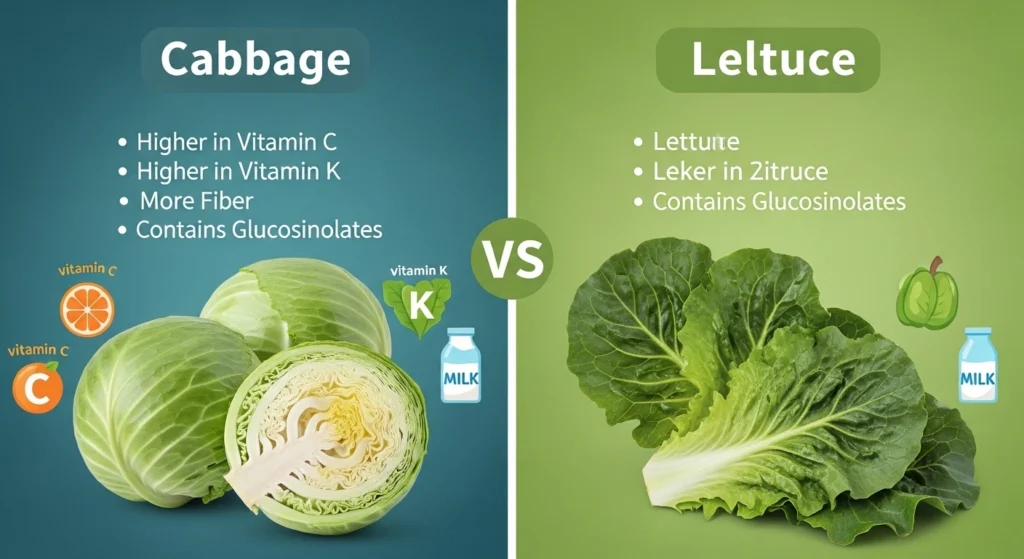
| Vitamin C | 36.6 mg (61% RDI) | 5–9 mg (5–15% RDI) | Cabbage | Immune support, collagen synthesis |
| Vitamin K | 76 μg (96% RDI) | 30–126 μg (30–105% RDI) | Tie | Bone health, blood clotting |
| Vitamin A | 98 IU (2% RDI) | 370–502 IU (10–17% RDI) | Lettuce | Vision, immune function (darker lettuces higher) |
| Fiber | 2.5g (10% RDI) | 1.2g (4% RDI) | Cabbage | Gut health, satiety, blood sugar control |
| Protein | 1.28g | 0.74–0.9g | Cabbage | Marginally more substantial |
| Folate (B9) | 43 μg (11% RDI) | 38 μg (10% RDI) | Cabbage | DNA synthesis, pregnancy crucial |
The Exclusive Bioactives
| Compound | Found In | Effect |
|---|---|---|
| Methylmethionine (Vitamin U) | Cabbage | Stomach lining protection, anti-ulcer |
| Glucosinolates | Cabbage (Brassicaceae) | Cancer-preventive, detoxification enzymes |
| Lactucin | Lettuce | Mild sedative, calming (need 2kg+ for effect) |
| Sulforaphane | Cabbage | Potent antioxidant, anti-inflammatory |
*”Cabbage is rich in methylmethionine, a substance also known as Vitamin U. Methylmethionine helps protect the stomach lining. It is primarily found in vegetables of the *Brassica oleracea* species.”* — Donga Science
The Nutritional Verdict: Cabbage wins on density—more vitamins, fiber, and bioactive compounds per calorie. Lettuce wins on hydration and vitamin A (especially darker varieties). For gut health and cancer prevention, cabbage’s cruciferous chemistry is unmatched. For hydration and low-calorie bulk, lettuce excels.
Part 5: The Culinary Divide – Raw vs. Cooked
The Transformation Test
| Preparation | Cabbage | Lettuce | Result |
|---|---|---|---|
| Raw/shredded | Crunchy, peppery, slightly bitter (excellent) | Crisp, sweet, mild (excellent) | Both excel |
| Sautéed | Sweetens, softens, develops depth (excellent) | Wilts, becomes mushy, releases water (poor) | Cabbage only |
| Roasted | Caramelizes, nutty, complex (excellent) | Burns, shrivels, bitter (terrible) | Cabbage only |
| Boiled | Soft, sweet, translucent (good to excellent) | Disintegrates, slimy (terrible) | Cabbage only |
| Fermented | Becomes sauerkraut, kimchi (excellent) | Becomes sludge (terrible) | Cabbage only |
| Grilled | Charring, smokiness, retains structure (excellent) | Collapses immediately (terrible) | Cabbage only |
| Stuffed/wrapped | Flexible, durable, holds filling (excellent) | Tears, fragile, limited applications (fair) | Cabbage preferred |
“Cabbage is crunchier, is often used in the kitchen in boiled or steamed forms, while lettuce is more commonly consumed raw.” — Donga Science
The Lettuce Exception: While generally heat-intolerant, lettuce can be:
- Grilled briefly (romaine halves, charred edges)
- Sautéed quickly (wilted lettuce with bacon, Southern style)
- Used as wraps (butter lettuce cups, raw)
But these are edge cases. Cabbage is the universal soldier—excellent raw, transformative when cooked.
Part 6: The Cultural Geography – Global Cuisines
Where Each Vegetable Rules
| Region | Cabbage Dominance | Lettuce Dominance |
|---|---|---|
| Northern Europe | Sauerkraut (Germany), bubble and squeak (UK), cabbage rolls (Poland) | Minimal traditional use |
| East Asia | Kimchi (Korea), hot pot ingredient (China), okonomiyaki (Japan) | Minimal (except Western-influenced salads) |
| Mediterranean | Stuffed cabbage (dolma), braised with olive oil | Greek salads (minimal lettuce), Middle Eastern mezze |
| Americas | Coleslaw, corned beef and cabbage, Southern fried cabbage | Burger/sandwich standard, Caesar salad, ranch dressing vehicle |
| Global fast food | Minimal | Ubiquitous (iceberg as default “green”) |
“Cabbage can be eaten raw and shredded in salads, or its leaves can be boiled to make dishes like cabbage wraps.” — Donga Science
Part 7: The Storage & Practical Guide
The Shelf Life Reality
| Factor | Cabbage | Lettuce |
|---|---|---|
| Refrigerator life | 2 weeks to 2 months | 3–7 days |
| Storage method | Whole, outer leaves intact; or chopped in glass container | Perforated bag, away from ethylene producers |
| Freezing | Excellent (blanched first) | Poor (becomes slimy) |
| Fermentation | Becomes better (sauerkraut, kimchi) | Becomes compost |
| Economic value | High (lasts, versatile, cheap nutrition) | Lower (perishable, limited uses) |
“Unlike lettuce, cabbage will actually store much longer! If kept in the fridge, or even a cool basement or cellar, it can last many months.” — Pleasant Grove Homestead
Part 8: The Motivational Synthesis – Lessons from Two Leaves
The Cabbage Philosophy
- Resilience through structure—dense, durable, improves with adversity (fermentation, cooking)
- Transformation through fire—heat reveals sweetness, complexity
- Longevity through preservation—stores for months, becomes better with time
- Nutritional density—maximum benefit per calorie
The Lettuce Philosophy
- Freshness through immediacy—best consumed now, not tomorrow
- Hydration through simplicity—water as nourishment, cooling, refreshing
- Gentleness through delicacy—requires care, rewards with crisp texture
- Low-calorie abundance—volume without consequence
The Culinary Wisdom
“Whether adding crisp lettuce to a refreshing salad or incorporating hearty cabbage into a savory stir-fry, both vegetables are part of a well-balanced diet.” — Signos
The Ultimate Insight: Cabbage and lettuce are not competitors but complements—the sturdy workhorse and the delicate refresher, the fermentable foundation and the immediate crunch.
Conclusion: The Verdict at the Produce Aisle
The next time you face those two green heads, you’ll know:
- Cabbage = Brassica, thick-leaved, dense, cruciferous, cooks magnificently, stores forever, nutrient-dense, peppery when raw, sweet when cooked
- Lettuce = Lactuca, thin-leaved, hydrated, composite family, raw specialist, perishable, hydrating, mild, crisp, cooling
Choose cabbage for: Coleslaw, stir-fries, soups, fermentation, stuffed rolls, roasted wedges, long-term storage, maximum nutrition
Choose lettuce for: Immediate salads, sandwiches, wraps, hydration, low-calorie bulk, raw crunch
Final Quote: “Cabbage is what you cook. Lettuce is what you eat while deciding what to cook. Both have their kingdoms.”
FAQ: Cabbage vs. Lettuce Mastery
Q: Can I substitute cabbage for lettuce in salads?
A: Yes, but expect difference. Raw cabbage is peppery, crunchier, more filling. Best shredded finely (coleslaw style) or use mild varieties like Napa or Savoy.
Q: Can I substitute lettuce for cabbage in cooked dishes?
A: Generally no. Lettuce disintegrates when heated. Exception: brief wilting, quick sauté, or as garnish after cooking.
Q: Which is better for weight loss?
A: Lettuce for volume with minimal calories (15 kcal/100g). Cabbage for satiety and nutrition density (25 kcal/100g but more fiber). Both excellent; cabbage keeps you fuller longer.
Q: Is cabbage healthier than lettuce?
A: Nutritionally denser: more vitamin C, fiber, cancer-preventive compounds. But lettuce provides more vitamin A and hydration. Rotate both for optimal nutrition.
Q: Why does cabbage smell when cooked?
A: Sulfur compounds (glucosinolates) release when heated—characteristic “cabbage smell.” Brief cooking or adding acid (vinegar, lemon) minimizes this.
Q: Can I eat cabbage raw like lettuce?
A: Absolutely. All cabbage varieties are excellent raw—shredded for slaw, chopped for salads, or used as wraps. Just expect stronger flavor and tougher texture than lettuce.
Conclusion
In summary, the difference between cabbage and lettuce lies in their structure, taste, texture, and culinary applications. Cabbage is firm, crunchy, and commonly used in cooked dishes or fermented foods, while lettuce is soft, refreshing, and mainly enjoyed raw in salads and sandwiches.
Recognizing the difference between cabbage and lettuce allows people to better appreciate the unique qualities of each vegetable. Whether you want the hearty crunch of cabbage or the light crispness of lettuce, both vegetables bring valuable nutrients and flavor to a balanced diet. Learn more at….

The author is a Ph.D scholar and has keen interest in what is happening around the world. I love to write, travel and observe. Constant zeal for new ideas is a trigger for me. Love, respect and live peacefully