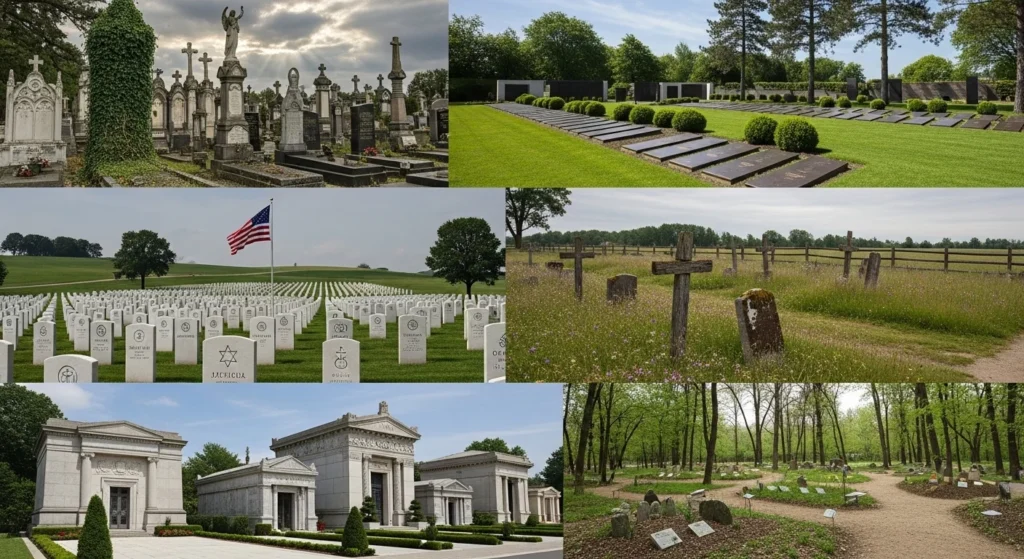
Language often hides fascinating cultural stories behind words that seem almost identical. One such pair that frequently confuses readers, writers, and even historians is the difference between cemetery and graveyard. At first glance, both terms appear to describe the same solemn place where the deceased are laid to rest, yet their origins, meanings, and historical backgrounds reveal subtle but intriguing distinctions. Understanding the difference between cemetery and graveyard not only enriches vocabulary but also uncovers centuries of religious tradition, social customs, and linguistic evolution.
When exploring the difference between cemetery and graveyard, we step into a world shaped by medieval churches, evolving burial practices, and changing landscapes of remembrance. A graveyard traditionally refers to burial grounds located beside a church, while a cemetery generally describes a larger, independent burial space not necessarily connected to religious buildings. Learning the difference between cemetery and graveyard helps readers appreciate how language reflects history, culture, and human attitudes toward life and death. For writers, students, and curious minds alike, recognizing the difference between cemetery and graveyard adds clarity and depth to communication while strengthening vocabulary for academic and everyday writing.
The Point to Ponder:
“Is there a difference between a cemetery and a graveyard?”
You were at a dinner party. Someone mentioned visiting a “graveyard” over the weekend. Another guest corrected them: “Don’t you mean cemetery?” The table fell silent. Wine glasses paused mid-air. Everyone realized they didn’t actually know.
Here’s the truth: Most people use these words interchangeably. Modern dictionaries list them as synonyms. But beneath this semantic confusion lies a 1,500-year story about religion, public health, class warfare, and how Western civilization learned to house its dead.
Part 1: The Etymological Autopsy – Where the Words Were Born
Cemetery: The Greek Dream of Eternal Sleep
The word “cemetery” arrives in English around 1485, but its journey began millennia earlier in ancient Greece.
Greek koimētērion → Latin coemētērium → Old French cimetiere → English cemetery
The root koimēsis means “sleep” or “bedchamber.” Early Christians adopted koimētērion to describe burial grounds because they believed the dead were merely sleeping—awaiting resurrection.
“The word implies that the land has been set aside as a burial ground… Isn’t that poetic?”
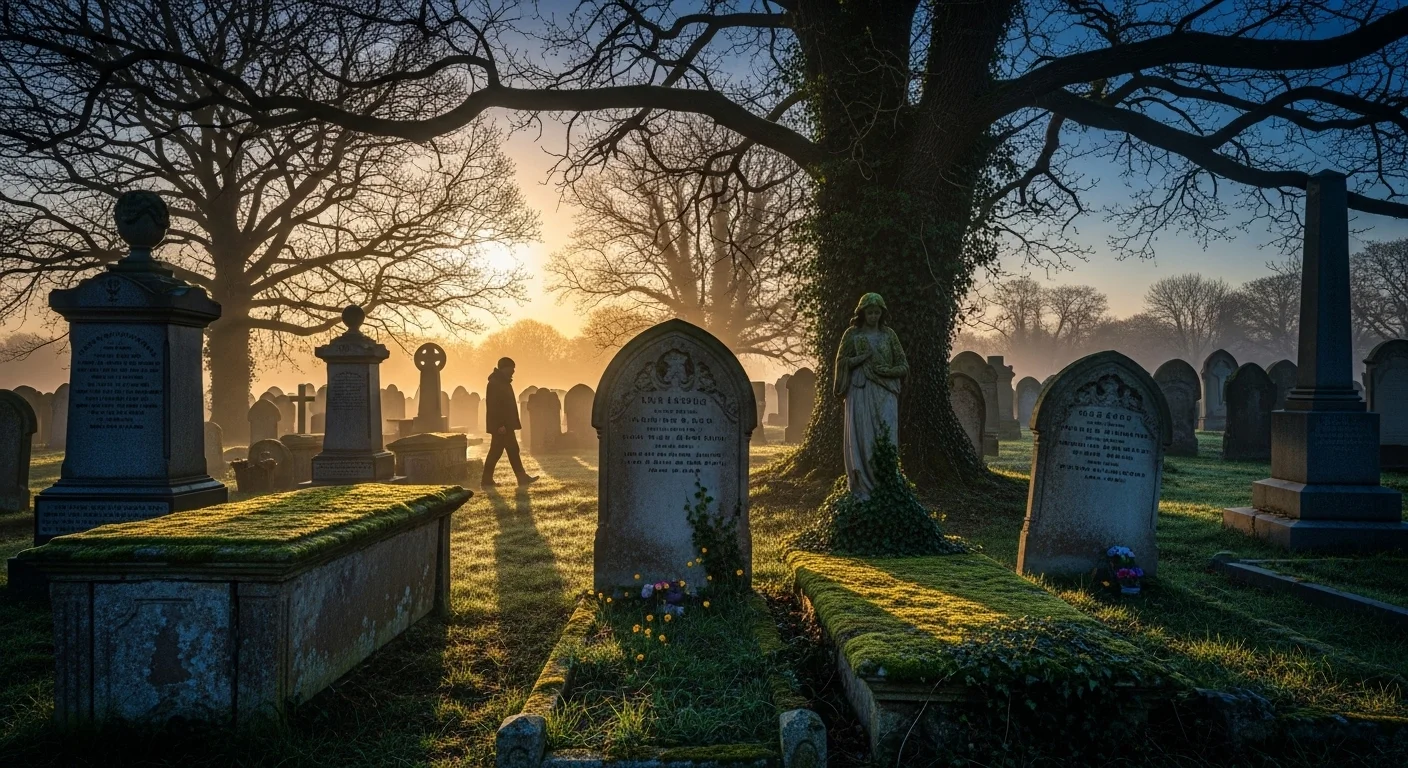
A Greek Cemetery
The original meaning: A dormitory for the dead. A place where bodies rest until morning comes.
Graveyard: The Germanic Reality of Digging
The word “graveyard” is younger, appearing in the mid-1700s, and its etymology is viscerally literal.
Proto-Germanic *graban (“to dig”) + Old English geard (“enclosed space”) = “A yard where we dig”
The root *graban also gives us “groove”—a channel dug into the earth. There is no romance here, no sleep metaphor. Just the shovel striking soil.
“The compound word graveyard stems from the proto-Germanic ‘graban,’ which means ‘to dig,’ and ‘gardan,’ which refers to an enclosed area of land.”
The original meaning: A fenced enclosure for dug graves. Practical. Earthbound. Unavoidably physical.
Part 2: The Historical Great Divide – Church Control vs. Secular Space
The 7th Century: When Churches Owned Death
From approximately 600 C.E., the Christian Church established a monopoly on burial in Europe. If you wanted a Christian burial—and you did, if you hoped for resurrection—you had to be interred on consecrated church grounds.
The hierarchy of holy death:
Status
Burial Location
Wealthy/Elite
Inside the church, beneath the floor, in crypts
Congregation members
Outside in the churchyard, specifically the graveyard section
The poor/outsiders
Unconsecrated ground, mass graves, or not at all
The graveyard was literally the church’s yard—an extension of sacred space where the faithful could await Judgment Day together.
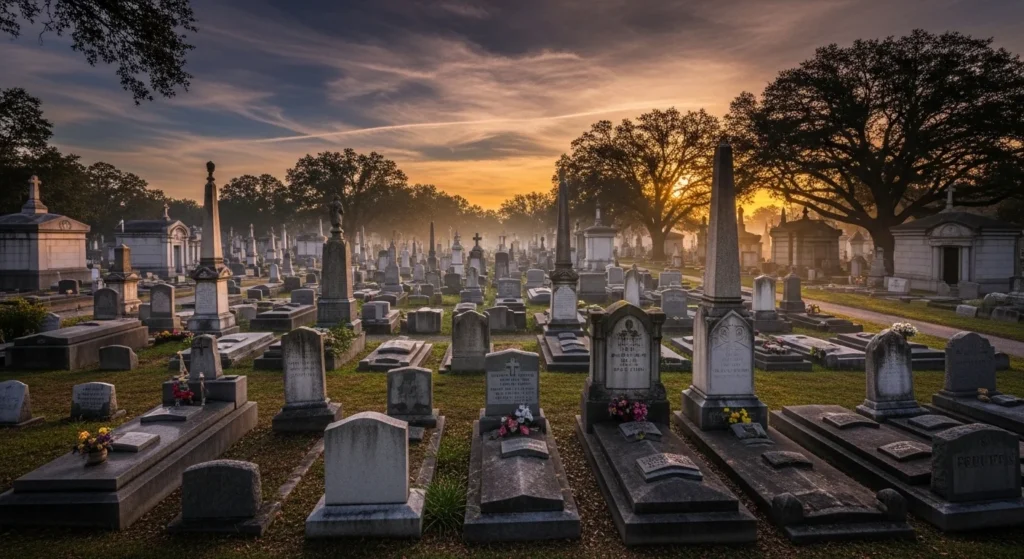
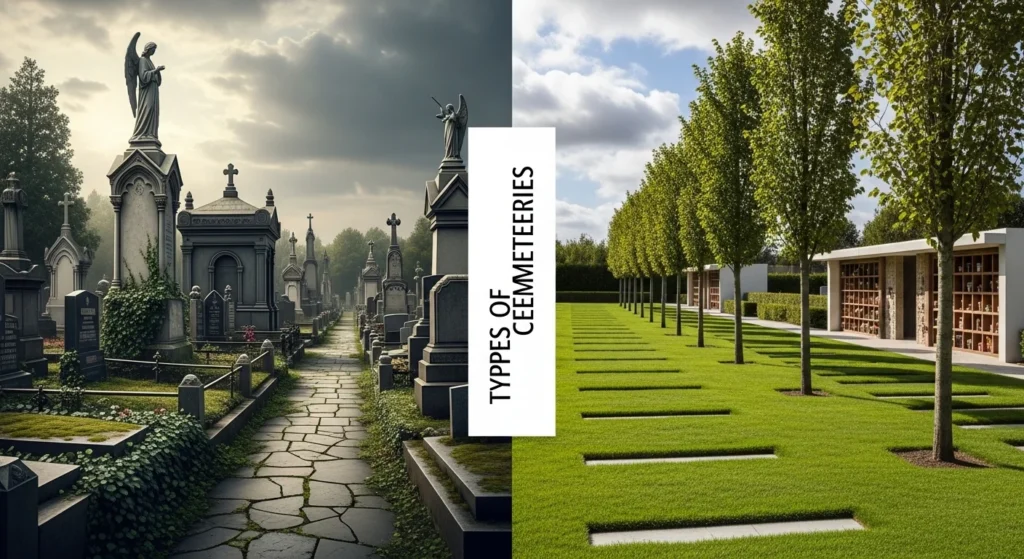
A Cemetery in Europe
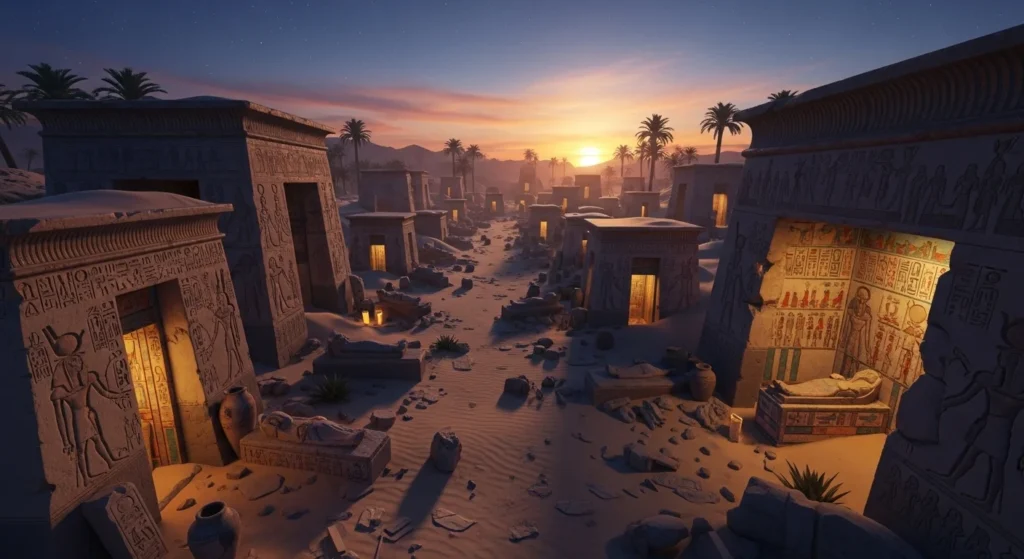
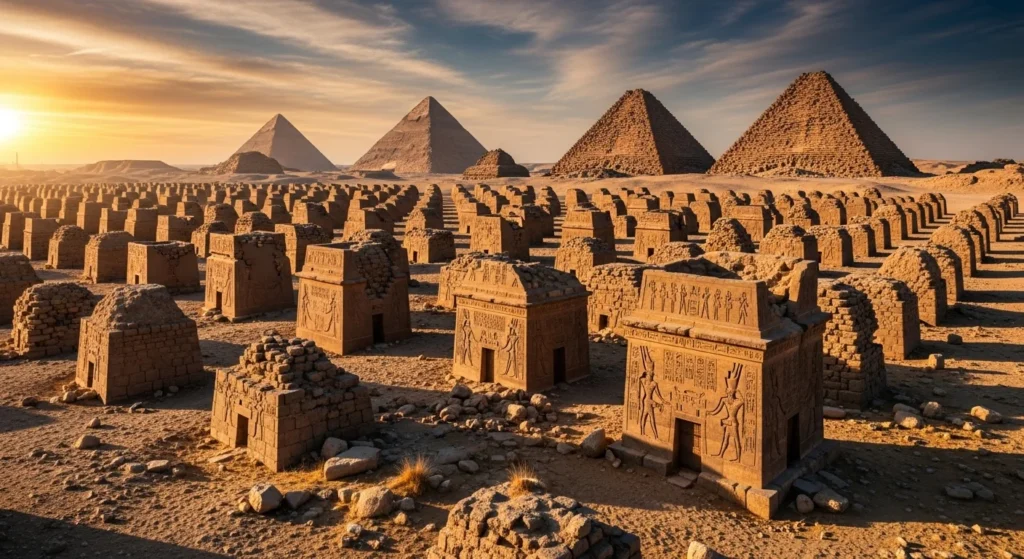
An Egyptian Graveyard
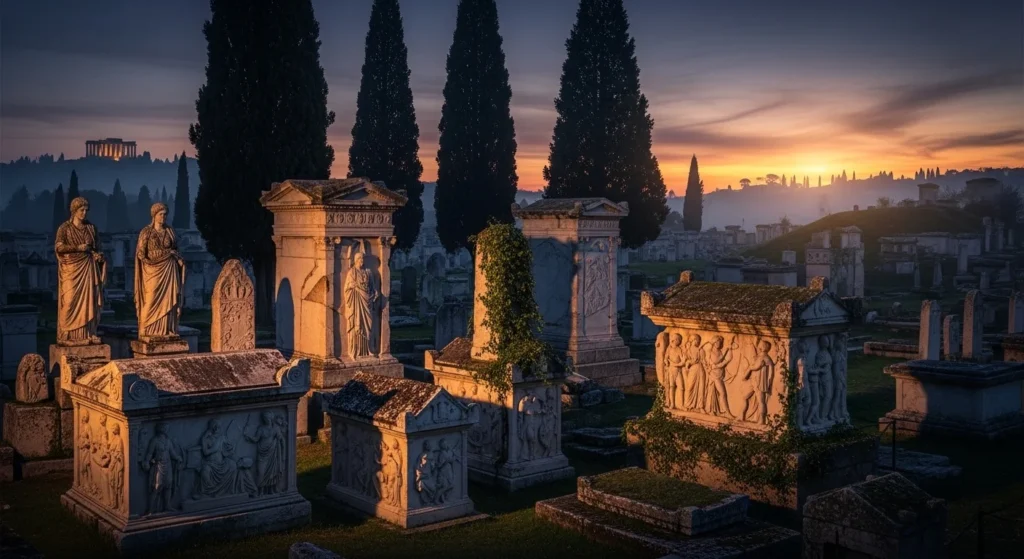
A Roman Graveyard
The 18th Century: When Cities Ran Out of Room
By the late 1700s, Europe faced a crisis: graveyards were full.
Bodies were buried on top of each other
Graves were dug up to make room for new arrivals
Public health disasters emerged from overcrowded, poorly managed burial grounds
“The unsustainability of church burials became apparent, and completely new places for burying people, independent of graveyards, appeared—and these were called cemeteries.”
The Cemetery Movement represented a radical shift:
Feature
Graveyard (Church-controlled)
Cemetery (Secular/Independent)
Location
Adjacent to church
Away from urban centers
Control
Religious authorities
Government, private companies, or individuals
Religious requirement
Christians only
Open to all faiths or none
Size
Limited by church property
Expansive, landscaped, park-like
Purpose
Sacred waiting for resurrection
Commemoration, public health, recreation
Mount Auburn Cemetery (Cambridge, Massachusetts, 1831) became the model: a rural cemetery designed as much for the living as the dead—a place for picnics, strolls, and contemplation of nature.
Graveyards vs Cemeteries
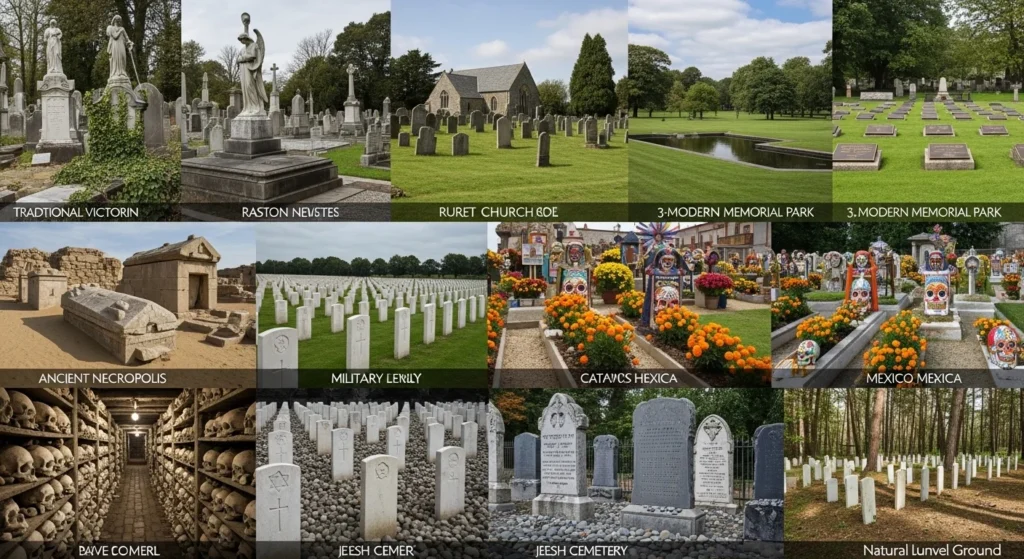
More on Graveyards and Cemeteries
Part 3: The Modern Distinction – What (Still) Separates Them
The Official Verdict: Synonyms, But With Ghosts
Contemporary dictionaries list “graveyard” and “cemetery” as synonyms. Professor David Sloane, author of Cemeteries in American History, confirms: “There is little or no difference between a graveyard and a cemetery.”
But the ghosts of history linger. Usage patterns reveal subtle distinctions:
Aspect
Graveyard
Cemetery
Association
Often implies church connection
Neutral, secular, or municipal
Size
Suggests smaller, intimate
Suggests larger, landscaped
Age
Connotes older, historical
Connotes 19th century onward
Maintenance
May imply less manicured
Suggests planned, maintained grounds
Atmosphere
Gothic, spooky, intimate
Park-like, monumental, diverse
“Graveyard tends to evoke images of old churchyards in the English countryside… Cemeteries tend to be much larger, as they are not simply a section of church property.”
The Visual Vocabulary
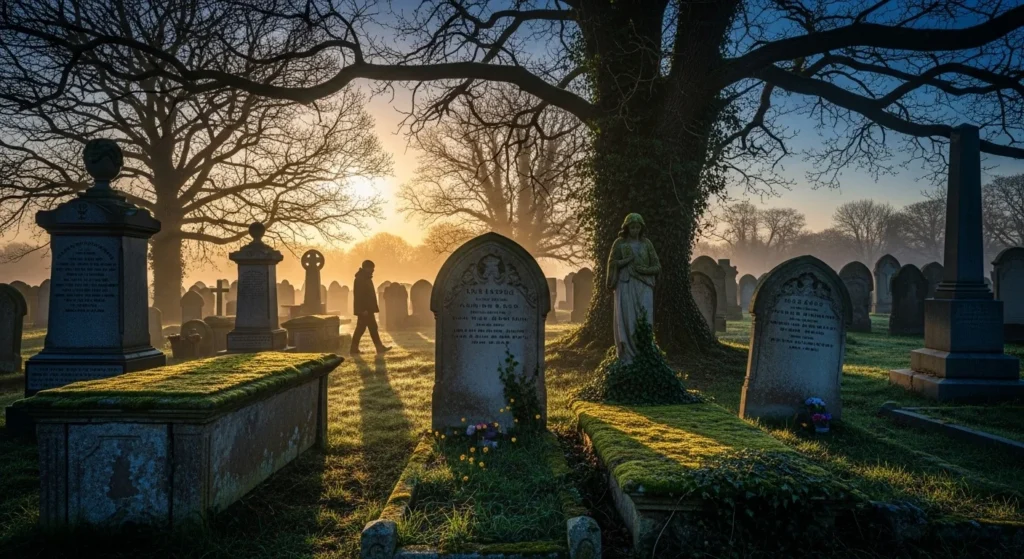
Graveyard imagery:
Older tombstones in disorderly arrangement
Crooked, weathered markers
Intimate, sometimes overgrown
Gothic, mysterious, Halloween-ready
Cemetery imagery:
Neat rows of plots
Large family monuments
Modern, maintained, park-like
Diverse architectural styles
Part 4: The Extended Family – Other Burial Ground Terms
The Complete Taxonomy of Death’s Real Estate
Term
Definition
Historical Context
Churchyard
Burial ground surrounding a church
The original medieval form
Graveyard
Section of churchyard used for burial
The working-class alternative to crypt burial
Cemetery
Independent burial ground, secular or multi-faith
19th-century innovation
Necropolis
Large, city-like cemetery (Greek: “city of the dead”)
Ancient and modern monumental cemeteries
Memorial Park
Modern cemetery with flat markers for easy maintenance
20th-century lawn-park cemeteries
Catacombs
Underground burial galleries
Early Christian, Roman, and Parisian
Potter’s Field
Burial ground for the poor and unknown
Biblical and American colonial tradition
Family Plot
Privately owned burial ground on estate
Plantation and rural American tradition
Columbarium
Structure for urn storage
Cremation-focused modern alternative
Mausoleum
Above-ground tomb structure
Elite burial, named for King Mausolus
Part 5: Cultural Variations – How the World Buries
Beyond the Western Binary
The cemetery/graveyard distinction is specifically Western, Christian, and modern. Other cultures offer different relationships with the dead:
Culture/Religion
Burial Practice
Sacred Space Concept
Ancient Rome
Cremation preferred; burial outside city walls
Cemetery originally meant catacombs
Hinduism
Cremation at burning grounds (śmaśāna)
Sacred rivers, especially the Ganges
Islam
Burial in simple cloth, directly in soil, facing Mecca
Cemetery as temporary resting place before resurrection
Judaism
Burial in consecrated ground, simple wooden coffins
Beit olam (house of eternity)
Tibetan Buddhism
Sky burial (corpse left for vultures)
No permanent burial ground needed
Ancient Egypt
Mummification, elaborate tombs
Necropolis as city of the dead for eternity
China
Ancestor veneration, family gravesites
Feng shui considerations for grave placement
Part 6: The SEO Semantic Field – Related Concepts for 2025
To truly master this vocabulary, understand the semantic ecosystem:
Category
Related Terms
Why It Matters
Architecture
Headstone, monument, mausoleum, crypt, tomb
Material culture of death
Ritual
Funeral, interment, inurnment, committal, memorial service
2025 Trend: “Green burial” and “natural burial” are disrupting the traditional cemetery model, returning to pre-industrial practices of simple interment without embalming or vaults.
Part 7: The Motivational Synthesis – Lessons from the Dead
What Cemeteries and Graveyards Teach the Living
From the Graveyard (Church-connected):
Community endures — We bury our dead together, in sacred proximity
Tradition grounds us — The churchyard connects generations in faith
Limitations force creativity — Small spaces demand intimate memorialization
From the Cemetery (Secular, expansive):
Democracy in death — Open to all, regardless of belief
Nature heals — Park-like settings comfort the grieving
Monumentality matters — Grand gestures preserve memory across centuries
“The rural cemetery movement was inspired by innovations in cemetery design in England and France, especially the Père Lachaise Cemetery in Paris… the ideal blending of romantic ideals in art, a changing attitude toward death, and a growing national identity.”
The Ultimate Insight: Whether graveyard or cemetery, these spaces are for the living. The dead do not care what we call their resting place. We name these grounds to make sense of our own mortality, to create beauty from loss, and to remember that we too will someday rest.
Conclusion: The Final Word
So, is there a difference between a cemetery and a graveyard?
Historically? Profoundly. One was church-controlled, sacred, limited. The other was secular, expansive, democratic.
Etymologically? Beautifully. One dreams of sleep and resurrection. The other admits we dig.
Today? Practically? They are synonyms, and no one will correct you for using either.
But knowing the difference—understanding that “graveyard” carries 1,500 years of church history while “cemetery” represents Enlightenment secularism—transforms you from casual speaker to cultural historian.
The next time someone asks at a dinner party, you won’t just answer. You’ll tell a story.
Q: Can I be buried in a graveyard if I’m not Christian? A: Historically, no. Graveyards were consecrated church property for congregation members. Today, policies vary. Some church graveyards remain restricted; others have opened to all. Cemeteries have always been more inclusive.
Q: Why are some cemeteries called “memorial parks”? A: Marketing and maintenance. “Memorial park” suggests lawn-like beauty with flat markers that don’t interfere with mowing. It’s the 20th-century evolution toward easier maintenance and less visual “death symbolism.”
Q: Is it disrespectful to call a cemetery a “graveyard”? A: No. Modern usage treats them as synonyms. However, specific institutions may prefer one term. When in doubt, use the name on the gate.
Q: What’s the oldest cemetery in the United States? A: Myles Standish Burial Ground (Duxbury, Massachusetts, c. 1638) is among the oldest. But Native American burial mounds predate European cemeteries by millennia.
Q: Can ashes be buried in a graveyard? A: Depends on religious rules. The Catholic Church permits ashes in cemeteries but prefers burial to scattering. Some traditional graveyards may restrict ashes. Always check specific regulations.
Conclusion
Although the terms are often used interchangeably in modern conversation, the difference between cemetery and graveyard lies primarily in their historical and cultural roots. A graveyard is typically a burial ground located next to a church, reflecting traditions from earlier centuries when churches managed most burials. A cemetery, on the other hand, refers to a larger and more organized burial area that may exist independently of religious institutions.
Understanding the difference between cemetery and graveyard not only clarifies language but also offers insight into the development of burial traditions and social structures. By recognizing this subtle distinction, readers gain a deeper appreciation for how words preserve history and cultural practices. Ultimately, learning the difference between cemetery and graveyard enriches vocabulary, improves writing precision, and allows us to communicate ideas with greater accuracy and elegance. Learn more at…
The author is a Ph.D scholar and has keen interest in what is happening around the world. I love to write, travel and observe. Constant zeal for new ideas is a trigger for me. Love, respect and live peacefully