
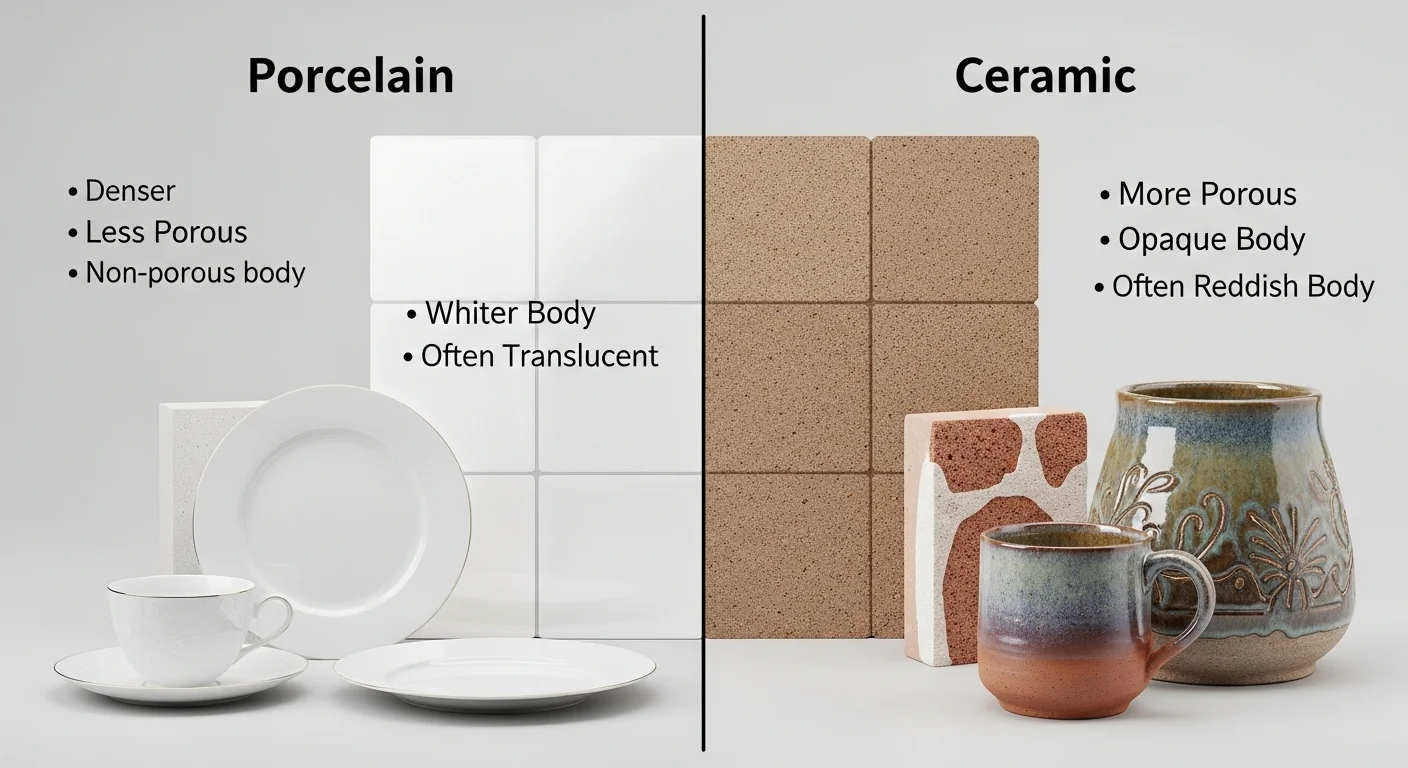
Difference between porcelain and ceramic is a topic that often sparks curiosity among homeowners, designers, and everyday consumers who encounter these materials in tiles, dishes, and decorative items. At first glance, they may appear almost identical, yet the difference between porcelain and ceramic lies in their composition, manufacturing process, durability, and practical uses. Both materials belong to the broad family of clay-based products that have been crafted by human civilizations for thousands of years, but subtle differences in ingredients and firing temperatures create noticeable distinctions in strength, texture, and performance.
Understanding the difference between porcelain and ceramic helps people make informed decisions when selecting materials for kitchens, bathrooms, flooring, or tableware. Porcelain is typically fired at higher temperatures and made from more refined clay, which gives it a denser and more durable structure. Ceramic, on the other hand, is usually slightly more porous and easier to shape, making it widely used for artistic and decorative purposes. By exploring the difference between porcelain and ceramic, readers can better appreciate how these traditional materials combine craftsmanship, science, and everyday functionality in modern life.
Pronunciation Guide
Porcelain
- US: /ˈpɔːrsəlɪn/ (POR-suh-lin)
- UK: /ˈpɔːslɪn/ (PAW-slin)
Ceramic
- US: /səˈræmɪk/ (suh-RAM-ik)
- UK: /səˈræmɪk/ (suh-RAM-ik)
Now that you can say them correctly, let’s discover what truly separates these versatile materials.
Difference Between Porcelain and Ceramic
Here are ten key distinctions that separate these two clay-based materials:
Learn more about the difference of other materials here…..
1. Raw Material Composition
Ceramic uses a blend of natural clay, minerals, and water. The clay comes from the earth and contains various impurities that give it character.
- 🟣 Terracotta pots use red clay rich in iron oxide
- 🟣 Earthenware dishes contain coarse, readily available clay
Porcelain uses a specific white clay called kaolin, mixed with feldspar and quartz. This pure white clay is rare and refined.
- 🟣 Fine china contains high-grade kaolin from specific regions
- 🟣 Dental porcelain uses purified kaolin for medical safety
2. Firing Temperature
Ceramic fires at lower temperatures between 1,800°F and 2,100°F (980°C to 1,150°C). This makes production easier and less expensive.
- 🟣 Flower pots bake at moderate heat to remain porous
- 🟣 Wall tiles fire quickly at lower temperatures for cost savings
Porcelain requires extreme heat between 2,200°F and 2,600°F (1,200°C to 1,400°C). This creates a glass-like, dense material.
- 🟣 Bone china fires at the highest temperatures for translucency
- 🟣 Industrial porcelain insulators need extreme heat for strength
3. Density and Weight
Ceramic remains porous and lighter. Water can seep through unless glazed, making it less durable for heavy use.
- 🟣 Ceramic mugs feel warm and slightly rough on unglazed bases
- 🟣 Clay roof tiles remain lightweight for easy installation
Porcelain becomes vitrified, meaning it turns glass-like and non-porous. It weighs more and feels colder to touch.
- 🟣 Porcelain floor tiles feel solid and hard underfoot
- 🟣 Sinks made of porcelain resist water absorption completely
4. Translucency
Ceramic blocks light completely. It remains opaque even in thin sections, showing its earthy, solid nature.
- 🟣 Thick ceramic bowls show no light through their walls
- 🟣 Decorative ceramic vases remain solid and shadowed
Porcelain allows light to pass through thin areas. This translucency signals high quality and fine craftsmanship.
- 🟣 Holding fine china to light reveals a warm glow through the rim
- 🟣 Porcelain lampshades diffuse light beautifully and evenly
5. Durability and Strength
Ceramic chips and cracks more easily. It suits decorative items and light-use objects rather than heavy daily wear.
- 🟣 Ceramic figurines break when dropped on hard floors
- 🟣 Earthenware plates scratch with regular knife use
Porcelain resists chips, scratches, and thermal shock. It lasts generations with proper care.
- 🟣 Porcelain tiles withstand heavy furniture and foot traffic
- 🟣 Antique porcelain vases survive centuries without damage
6. Water Absorption Rate
Ceramic absorbs 5% to 10% of water by weight. This porosity makes it unsuitable for outdoor freeze-thaw cycles.
- 🟣 Unglazed ceramic planters absorb water and can crack in winter
- 🟣 Ceramic coasters soak up condensation from cold drinks
Porcelain absorbs less than 0.5% water, often nearly zero. This makes it frost-proof and ideal for outdoors.
- 🟣 Porcelain pavers survive harsh winters without cracking
- 🟣 Outdoor porcelain tiles resist rain and snow damage
7. Surface Texture and Finish
Ceramic often shows a handmade, rustic appearance. Colors vary naturally, and surfaces feel organic.
- 🟣 Handmade ceramic bowls show finger marks and slight imperfections
- 🟣 Mexican Talavera tiles display vibrant, varied colors
Porcelain achieves a uniform, refined finish. Colors stay consistent, and surfaces feel smooth and manufactured.
- 🟣 Porcelain subway tiles create perfectly uniform kitchen backsplashes
- 🟣 Polished porcelain floors look like marble with perfect consistency
8. Cost and Accessibility
Ceramic costs less due to abundant materials and lower firing temperatures. It offers budget-friendly options.
- 🟣 Ceramic mugs sell for $3 to $8 in most stores
- 🟣 Basic ceramic floor tiles cost $1 to $5 per square foot
Porcelain demands higher prices because of rare kaolin and energy-intensive firing. It represents a long-term investment.
- 🟣 Fine porcelain dinner sets cost $200 to $2,000
- 🟣 Quality porcelain tiles run $3 to $15 per square foot
9. Design Versatility
Ceramic embraces artisanal, organic shapes. It suits bohemian, rustic, and handcrafted aesthetics.
- 🟣 Wabi-sabi ceramic tea bowls celebrate imperfection
- 🟣 Moroccan ceramic plates feature hand-painted geometric patterns
Porcelain excels at mimicking other materials. It can look like marble, wood, or metal with precision.
- 🟣 Porcelain tiles copy Calacatta marble veining exactly
- 🟣 Wood-look porcelain planks replicate oak grain patterns
10. Maintenance Requirements
Ceramic needs sealing for unglazed areas and gentle cleaning to avoid staining porous surfaces.
- 🟣 Sealing ceramic countertops annually prevents oil stains
- 🟣 Harsh chemicals etch unglazed ceramic finishes
Porcelain needs almost no maintenance. It resists stains, chemicals, and requires only basic cleaning.
- 🟣 Bleach won’t damage porcelain bathroom fixtures
- 🟣 Porcelain kitchen counters need only soap and water
Understanding the Nature and Behavior of Each
The Nature of Ceramic
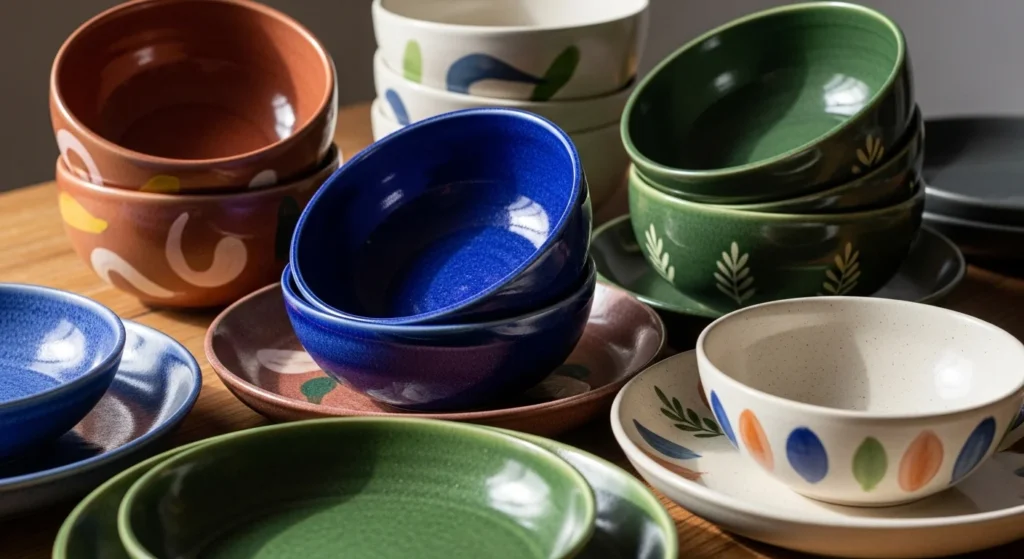
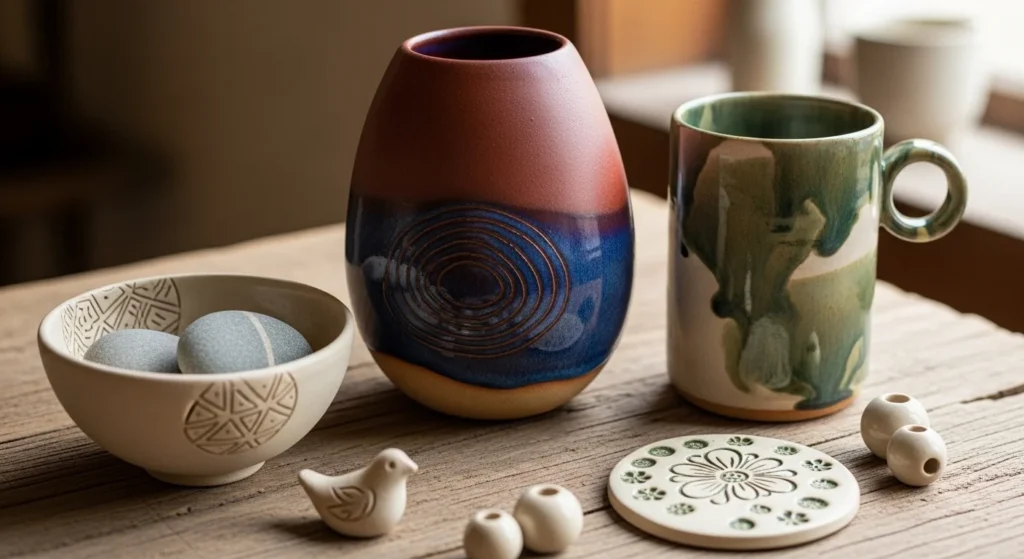
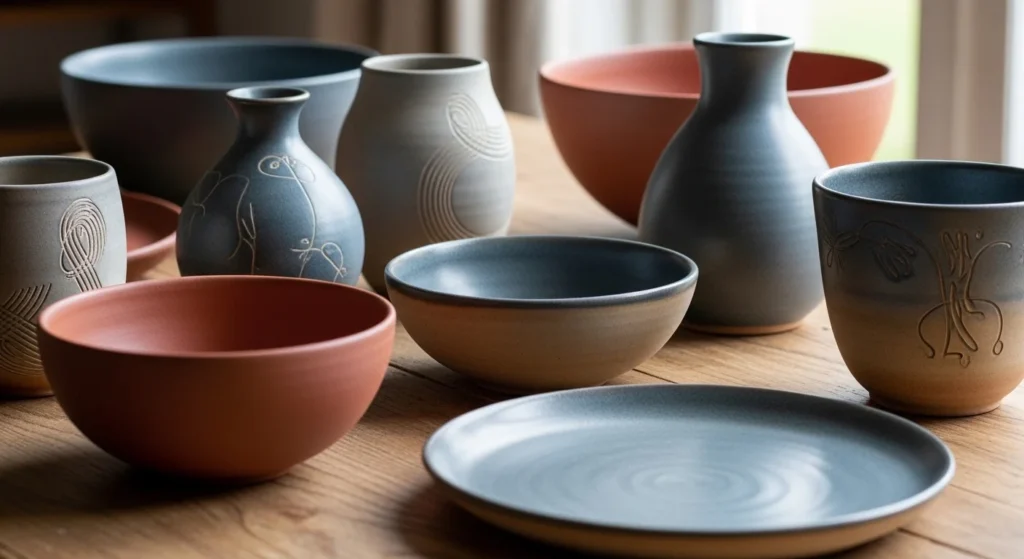
Ceramic behaves like a warm, approachable friend. It accepts imperfection and celebrates handmade character. The material remains forgiving during creation, allowing artists to shape and reshape it. Ceramic holds memories of the earth it came from, showing specks, color variations, and organic textures. It breathes slightly, absorbing moisture and releasing it slowly. This makes ceramic feel alive and connected to nature. Ceramic teaches us that beauty exists in imperfection and that functional items can carry soul and story.
The Nature of Porcelain
Porcelain acts like a disciplined perfectionist. It demands precision from the first step to the last. The material remembers every mistake—uneven thickness cracks, impurities cause weak spots, and temperature errors destroy pieces. However, when treated correctly, porcelain rewards you with unmatched elegance and durability. It transforms into something harder than glass yet more beautiful than stone. Porcelain teaches us that refinement requires patience, that high standards create lasting value, and that true quality stands the test of time.
Why Are People Confused About Their Use?
Many people mix up porcelain and ceramic because all porcelain is technically ceramic, but not all ceramic is porcelain. Think of it like squares and rectangles—every square is a rectangle, but not every rectangle is a square. Porcelain is a specialized, high-grade ceramic. Stores often label everything “ceramic” to simplify, causing confusion. Price differences create suspicion—why pay more for “the same thing”? Visual similarity fools shoppers; glazed ceramic can look like porcelain at first glance. Additionally, marketing terms like “china,” “fine china,” and “bone china” add layers of mystery. Some manufacturers mislabel products to charge premium prices. However, knowing the core differences—kaolin content, firing temperature, and water absorption—clears the fog. Once you grasp these fundamentals, you can confidently identify any piece placed before you.
Comparison Table: Porcelain vs Ceramic
| Feature | Ceramic | Porcelain |
|---|---|---|
| Clay Type | Various natural clays | Specific white kaolin clay |
| Firing Temperature | 1,800°F to 2,100°F | 2,200°F to 2,600°F |
| Density | Porous and lighter | Vitrified and heavy |
| Water Absorption | 5% to 10% | Less than 0.5% |
| Translucency | Opaque, blocks light | Translucent in thin sections |
| Durability | Moderate, chips easily | High, resists damage |
| Cost | $1 to $8 per item/sq ft | $3 to $15+ per item/sq ft |
| Texture | Rustic, handmade feel | Smooth, uniform, refined |
| Outdoor Use | Risky in freeze-thaw areas | Safe for all climates |
| Maintenance | Requires sealing | Virtually maintenance-free |
Which Is Better in What Situation?
Choose Ceramic When:
You want affordable, character-rich items for indoor use. Ceramic works perfectly for decorative pieces, plant pots, and casual dinnerware that won’t face heavy abuse. It suits rustic, farmhouse, or bohemian design styles where handmade charm matters more than perfection. Choose ceramic for wall tiles in dry areas, art projects, and items where you want natural color variation. It’s ideal when budget constraints exist but style remains important. Ceramic also fits educational settings where children learn pottery, as it’s forgiving and inexpensive to replace.
Choose Porcelain When:
You need maximum durability for high-traffic areas or outdoor installation. Porcelain suits bathroom floors, kitchen countertops, and commercial spaces where longevity matters. It’s essential for freeze-thaw climates where water expansion destroys lesser materials. Choose porcelain for fine dining occasions where elegance and translucency impress guests. It fits modern, minimalist designs requiring uniform appearance. Porcelain is necessary for medical and dental applications where purity and strength are critical. When making a long-term investment in your home, porcelain pays back through decades of service and minimal replacement costs.
Metaphors and Similes in Language
Porcelain Metaphors and Similes:
- 🟣 “Her skin was like fine porcelain, smooth and translucent”
- 🟣 “The situation was as delicate as porcelain—handle with care”
- 🟣 “Their friendship had a porcelain quality—beautiful but fragile”
- 🟣 “He had a porcelain heart, easily cracked but lovely to behold”
Ceramic Metaphors and Similes:
- 🟣 “The community was like ceramic, molded by many hands over time”
- 🟣 “Her ideas were still ceramic, pliable and taking shape”
- 🟣 “The old neighborhood had a ceramic quality—earthy, warm, and slightly worn”
- 🟣 “Their love was ceramic, not perfect but handmade with care”
Connotative Meanings
Porcelain Connotations:
- 🟣 Positive: Refined, elegant, pure, valuable, delicate, sophisticated, premium
- 🟣 Negative: Fragile, expensive, cold, unapproachable, high-maintenance
- 🟣 Neutral: White, smooth, manufactured, vitrified
Example: “The porcelain complexion of the statue drew admiring crowds” (positive—beauty). “Don’t treat him like porcelain; he’s stronger than you think” (negative—overly delicate).
Ceramic Connotations:
- 🟣 Positive: Earthy, warm, handmade, accessible, natural, artistic, genuine
- 🟣 Negative: Cheap, crude, imperfect, heavy, porous
- 🟣 Neutral: Clay-based, fired, glazed, solid
Example: “The ceramic warmth of the studio made everyone feel at home” (positive—welcoming). “His ceramic approach lacked refinement” (negative—unsophisticated).
Idioms and Proverbs
Porcelain Idioms:
- 🟣 “Bull in a china shop” – A clumsy person in a delicate situation
- Example: “Sending him to negotiate peace was like sending a bull into a china shop.”
- 🟣 “Porcelain skin” – Very fair, smooth, delicate complexion
- Example: “The actress was famous for her porcelain skin and red lips.”
- 🟣 “Porcelain throne” – Humorous term for a toilet
- Example: “He spent an hour reading the newspaper on his porcelain throne.”
- 🟣 “Not made of porcelain” – Not as fragile as assumed
- Example: “She’s tougher than she looks—she’s not made of porcelain.”
Ceramic Idioms:
- 🟣 “Ceramic victory” – A win that is brittle and may break easily (rare usage)
- Example: “Their ceramic victory in the debate shattered under cross-examination.”
Literary Works Featuring Porcelain and Ceramic
- 🟣 “The Porcelain Doll” by Emma Donoghue (short story, 2014). Explores themes of fragility and strength through a porcelain doll passed through generations.
- 🟣 “The Ceramic Dog” by Mark Haddon (poetry collection, 2013). Uses ceramic metaphors to explore human fragility and artistic creation.
- 🟣 “Memoirs of a Geisha” by Arthur Golden (1997, novel). Features extensive descriptions of Japanese porcelain and ceramic traditions in tea ceremonies.
- 🟣 “The Clay Machine-Gun” by Victor Pelevin (1996, novel). While focused on clay, explores ceramic and porcelain symbolism in Russian culture.
- 🟣 “Jasper Johns: The Business of the Eye” (art criticism). Discusses the artist’s use of ceramic and porcelain imagery in modern American art.
Movies Featuring Porcelain and Ceramic
- 🟣 “The Last Emperor” (1987, China/UK). Features elaborate scenes in the Forbidden City showcasing priceless Chinese porcelain collections.
- 🟣 “Ghost” (1990, USA). The famous pottery wheel scene, while working with clay, represents the ceramic arts and creative passion.
- 🟣 “The Great Beauty” (2013, Italy). Includes scenes of Roman ceramic art and porcelain collections in aristocratic homes.
- 🟣 “Memoirs of a Geisha” (2005, USA). Displays traditional Japanese porcelain tea ceremonies and ceramic arts throughout.
- 🟣 “The Duke of Burgundy” (2014, UK/Hungary). Features antique porcelain collecting as a central plot element and character study.
Frequently Asked Questions
Question 1: Is porcelain just fancy ceramic?
Yes and no. Porcelain is a specific, high-grade type of ceramic made from kaolin clay and fired at extreme temperatures. While all porcelain is ceramic, not all ceramic qualifies as porcelain. The distinction matters for durability and water resistance.
Question 2: Can porcelain go in the microwave and dishwasher?
Most modern porcelain handles microwaves and dishwashers safely. However, antique porcelain with gold or silver detailing may spark in microwaves. Always check manufacturer labels, as some fine china requires hand washing to preserve delicate glazes.
Question 3: Why is porcelain more expensive than ceramic?
Three factors drive the cost: rare kaolin clay deposits, energy-intensive high-temperature firing, and lower success rates during production. Porcelain also requires more skilled labor and quality control, adding to the final price.
Question 4: Can ceramic tiles be used outdoors?
Only if specifically rated for exterior use and properly sealed. Standard ceramic absorbs too much water, leading to freeze-thaw cracking in cold climates. Porcelain remains the safer choice for outdoor installations.
Question 5: How do I tell if my dishes are porcelain or ceramic?
Hold the piece to light—porcelain shows translucency at thin edges. Check the bottom for a manufacturer’s mark. Porcelain feels heavier and colder, while ceramic feels warmer and lighter. When tapped, porcelain rings with a clear, bell-like sound compared to ceramic’s dull thud.
How Are Both Useful for Surroundings?
Porcelain and ceramic serve communities beyond mere decoration. Ceramic art therapy helps trauma survivors express emotions safely, molding clay to release tension. Community ceramic studios provide affordable creative spaces, bringing neighbors together across age and background. Ceramic water filters in developing countries purify drinking water cheaply, saving lives through simple technology.
Porcelain insulators enable electrical grids worldwide, keeping power flowing safely through storms. Dental porcelain restores smiles and confidence for millions of patients annually. Porcelain medical implants resist rejection better than metal alternatives. Both materials support sustainable building—ceramic tiles cool homes naturally in hot climates, reducing air conditioning needs.
Culturally, ceramic traditions preserve indigenous heritage, from Native American pottery to African ceramic arts. Porcelain manufacturing creates skilled jobs in regions with kaolin deposits. Both materials teach patience and process to young people, countering instant-gratification culture. Environmentally, they last decades, reducing replacement waste compared to plastic alternatives.
Final Words for the Both
Porcelain and ceramic represent two philosophies of material culture. Ceramic teaches us that imperfection holds beauty, that earth can be shaped by hands, and that accessibility matters. It reminds us that art belongs to everyone, not just the wealthy. Ceramic connects us to ancient traditions when humans first shaped mud into useful forms.
Porcelain teaches us that refinement creates durability, that high standards produce lasting value, and that rare materials deserve respect. It reminds us that some things improve with technological advancement and that beauty can be precise. Porcelain connects us to global trade routes, royal courts, and the human desire for perfection.
Together, they form a complete picture of human creativity—rustic and refined, accessible and exclusive, earthy and elegant. Master both, and you master the art of selecting materials that serve real needs while expressing personal values.
Conclusion
Understanding the difference between porcelain and ceramic empowers your choices in home design, dining, and construction. While ceramic offers affordable, character-rich warmth for indoor spaces, porcelain provides unmatched durability and elegance for demanding applications. Both carry thousands of years of human history, from ancient cooking pots to modern surgical implants. Whether you choose the earthy charm of hand-thrown ceramic bowls or the refined perfection of translucent porcelain tiles, you participate in traditions older than written language. The next time you shop for dishes, floors, or art, you’ll know exactly which material serves your needs best. Know more at…

The author is a Ph.D scholar and has keen interest in what is happening around the world. I love to write, travel and observe. Constant zeal for new ideas is a trigger for me. Love, respect and live peacefully