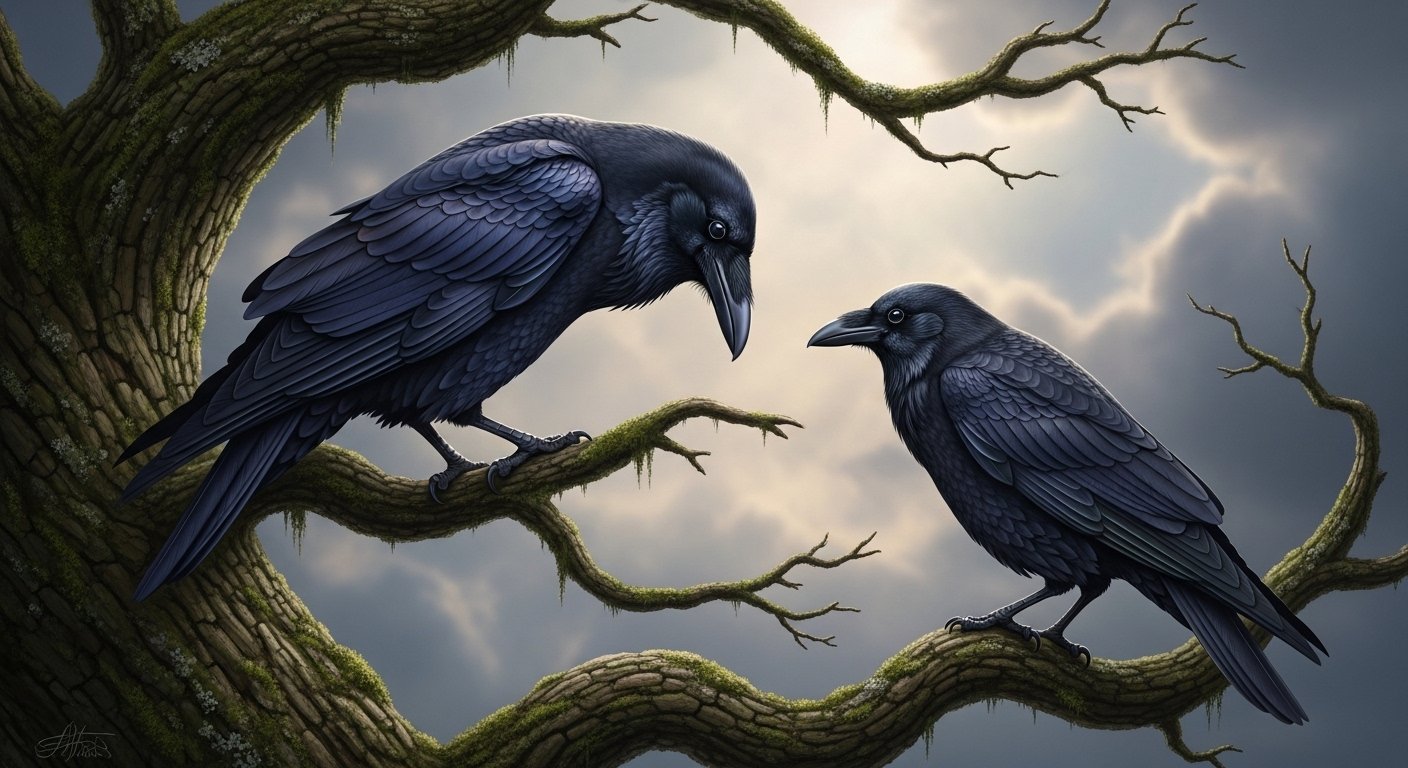
The difference between raven and crow often becomes clear when you notice two large black birds sitting on electric wires during an early morning walk. One looks heavier, deeper in voice, and almost mysterious, while the other moves in lively groups across fields and cities. Many people casually call both birds “crows,” yet the difference between raven and crow matters more than we think. Bird watchers, students, and nature lovers frequently ask about the difference between raven and crow because both belong to the same family but live very different lives. Understanding the difference between raven and crow helps us read nature more carefully, just like learning to tell twins apart by their habits instead of their faces.
Pronunciation
Raven
US: /ˈreɪ.vən/
UK: /ˈreɪ.vən/
Crow
US: /kroʊ/
UK: /krəʊ/
Before we explore deeper, let us move from simple observation to clear scientific understanding of these fascinating birds.
Key Difference Between Raven and Crow
Ravens are larger, quieter thinkers of the sky, while crows are social city planners who thrive in groups. Their size, voice, flight, and behavior separate them clearly.
Why Is Their Difference Necessary to Know for Learners and Experts?
Knowing the difference helps students understand biodiversity and animal classification. Environmental experts study these birds to track ecosystem health. Farmers observe crows for crop behavior, while researchers study ravens for intelligence and problem solving. These birds also appear in culture, folklore, and literature. Correct identification improves scientific learning, wildlife protection, and environmental awareness in society.
Difference Between Raven and Crow
1. Size
Ravens are bigger than crows.
Example 1: A raven looks almost like a small eagle in flight.
Example 2: A crow appears medium-sized near houses.
2. Beak Shape
Ravens have thick and curved beaks.
Example 1: A raven’s beak helps tear food.
Example 2: A crow’s beak looks slimmer for picking grains.
3. Tail Shape
Raven tails look wedge-shaped.
Example 1: Seen clearly when flying high.
Example 2: Tail forms a pointed end.
Crow tails look fan-shaped.
Example 1: Spread evenly during flight.
Example 2: Appears straight at the end.
4. Voice Sound
Ravens make deep croaking sounds.
Example 1: Loud “gronk” calls in forests.
Example 2: Echoing voice in mountains.
Crows produce sharp “caw” sounds.
Example 1: Common city noise.
Example 2: Group calling near trees.
5. Flying Style
Ravens glide smoothly.
Example 1: Long soaring circles.
Example 2: Less wing flapping.
Crows flap wings often.
Example 1: Quick movement across streets.
Example 2: Direct flight between buildings.
6. Social Behavior
Ravens prefer pairs.
Example 1: Seen alone or in couples.
Example 2: Guard territory strongly.
Crows live in groups.
Example 1: Large flocks at sunset.
Example 2: Community nesting.
7. Habitat
Ravens like wild areas.
Example 1: Mountains and forests.
Example 2: Remote cliffs.
Crows adapt to cities.
Example 1: Urban parks.
Example 2: Agricultural lands.
8. Intelligence Display
Ravens solve complex problems.
Example 1: Using tools for food.
Example 2: Memory-based hunting.
Crows show teamwork intelligence.
Example 1: Warning signals.
Example 2: Cooperative feeding.
9. Neck Feathers
Ravens have shaggy throat feathers.
Example 1: Visible during calls.
Example 2: Looks fluffy.
Crows have smooth necks.
Example 1: Clean feather line.
Example 2: Less visible texture.
10. Lifespan
Ravens live longer.
Example 1: Can reach 20+ years.
Example 2: Strong survival skills.
Crows live shorter lives.
Example 1: Average urban lifespan.
Example 2: Higher environmental risks.
Nature and Behaviour
Raven Nature:
Ravens are curious and independent. They explore objects and remember locations. They often play in the air for fun.
Crow Nature:
Crows are social and alert. They communicate constantly and protect their community from danger.
Why Are People Confused About Their Use?
Both birds are black, intelligent, and belong to the same bird family. From a distance, size and tail differences are hard to see. Movies and stories also use the names interchangeably, which increases confusion.
Difference and Similarity Table
| Feature | Raven | Crow | Similarity |
|---|---|---|---|
| Size | Larger | Smaller | Both black birds |
| Voice | Deep croak | Sharp caw | Vocal communication |
| Habitat | Wild areas | Cities | Highly adaptive |
| Social Life | Pair-based | Group-based | Intelligent |
| Beak | Thick | Slim | Omnivorous diet |
| Intelligence | Problem solving | Team learning | Smart species |
Which Is Better in What Situation?
Ravens are better indicators of untouched natural ecosystems. Scientists study them in forests and mountains to understand wildlife balance. Their intelligence helps research on animal cognition and survival strategies.
Crows are more useful in urban environments. They clean waste by eating leftovers and insects. Their presence helps control pests and maintain ecological balance in cities and farms. Read more…
How Are Raven and Crow Used in Metaphors and Similes?
Ravens often symbolize mystery or deep wisdom.
Example: “His silence sat like a raven watching the world.”
Crows symbolize alertness or warning.
Example: “The crowd gathered like crows sensing change.”
Connotative Meaning
Raven
Positive: Wisdom, intelligence
Negative: Death, darkness
Neutral: Wild nature
Example: A raven in stories often predicts change.
Crow
Positive: Community, adaptability
Negative: Noise, trouble
Neutral: Survival
Example: Busy streets filled with crows show active life.
Idioms and Proverbs
- “As the crow flies”
Example: The village is five miles away as the crow flies. - “Eating crow”
Example: He had to eat crow after his mistake. - “A raven never forgets” (folk saying)
Example: Like a raven, she remembered every detail.
Ravens and Crows in Literature
- The Raven | Poem | Edgar Allan Poe | 1845
- Norse Mythology Stories | Mythology | Associated with Odin | Ancient era
- Crow | Poetry Collection | Ted Hughes | 1970
Movies Based on Ravens or Crows
- The Crow (1994, USA)
- The Crow (2024, USA)
- Ravenous (1999, USA/UK)
Frequently Asked Questions
1. Is a raven bigger than a crow?
Yes, ravens are noticeably larger.
2. Can ravens and crows live together?
Sometimes, but they usually keep distance.
3. Which bird is more intelligent?
Both are intelligent, but ravens show advanced problem solving.
4. Are ravens found in cities?
Rarely. They prefer wild areas.
5. Why do crows gather in groups?
For safety, food sharing, and communication.
How Are Both Useful for Surroundings?
Crows clean urban waste and control insects. Ravens help balance wildlife ecosystems by scavenging dead animals. Both birds recycle organic matter and reduce environmental pollution naturally.
Final Words for Raven and Crow
Ravens represent solitude and deep intelligence.
Crows represent teamwork and survival strength.
Both birds show nature’s brilliance in different forms.
Conclusion
Understanding the difference between raven and crow opens a small but meaningful window into nature. Though they share color and family roots, their behavior, voice, and lifestyle clearly separate them. Ravens rule quiet wild skies, while crows master busy human spaces. Learning their differences improves observation skills and environmental awareness. These birds remind us that even similar appearances can hide unique identities. When you next see a black bird flying above, you may no longer guess. You will know whether it is a thoughtful raven or a social crow shaping the rhythm of the landscape.

The author is a Ph.D scholar and has keen interest in what is happening around the world. I love to write, travel and observe. Constant zeal for new ideas is a trigger for me. Love, respect and live peacefully