
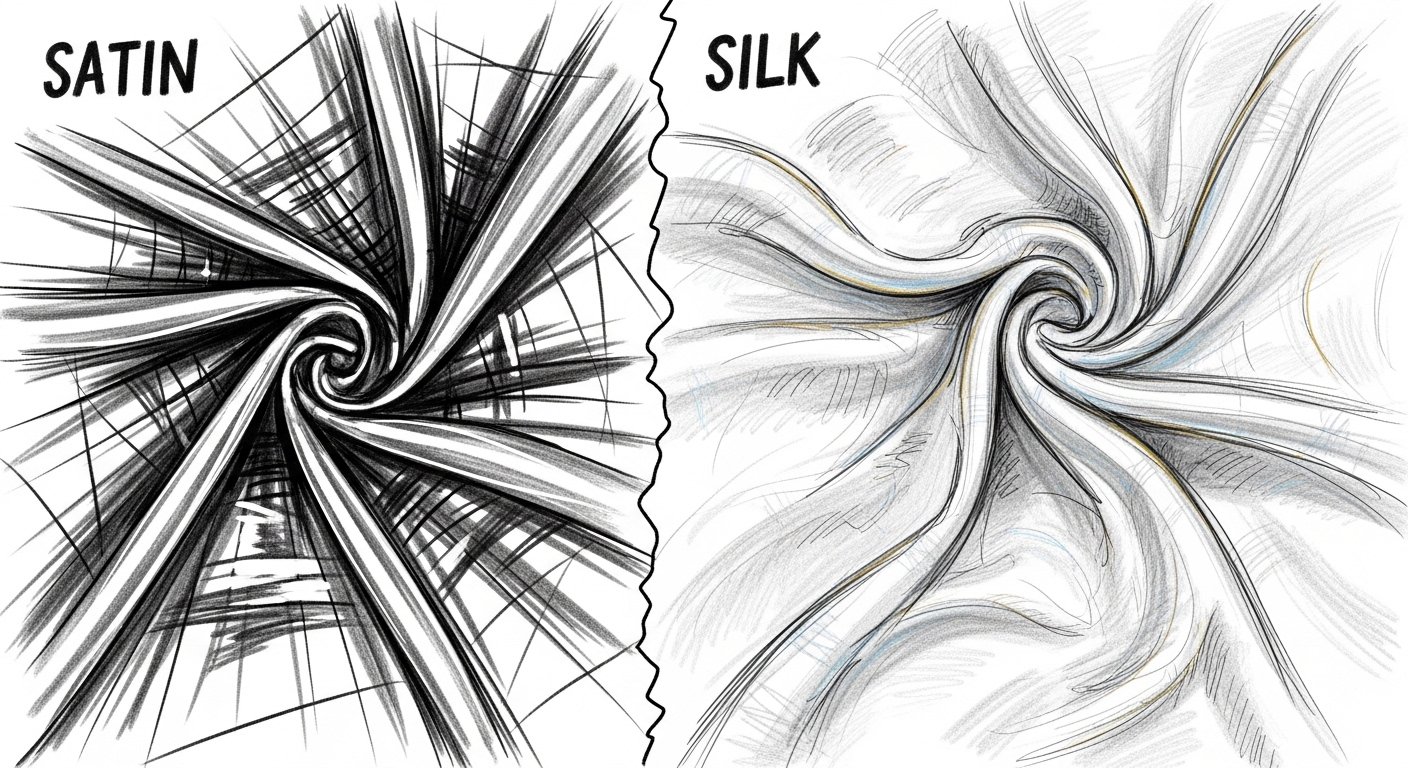
Difference between satin and silk often becomes clear only after someone stands inside a bedding or clothing store, gently touching two fabrics that look equally luxurious yet feel surprisingly different. Imagine preparing for a wedding or redesigning a bedroom. One fabric shines like moonlight reflecting on water, while the other flows softly like a natural whisper against the skin. Both appear elegant, both promise comfort, yet their origins and qualities tell entirely different stories.
Understanding the difference between satin and silk helps buyers, designers, students, and textile professionals make informed decisions. Many people assume satin and silk are identical, but the difference between satin and silk lies in structure, material, cost, durability, and purpose. Knowing the difference between satin and silk prevents costly mistakes when selecting clothing or bedding. The difference between satin and silk also matters for skincare, sustainability, and maintenance choices in modern living.
Key Difference Between the Both
The fundamental distinction is simple:
- Silk is a natural fiber produced by silkworms.
- Satin is a weaving technique, not a fiber itself.
Silk can be woven into satin, but satin can also be made using polyester, nylon, or rayon.
Why Is Their Difference Necessary to Know for Learners and Experts?
Understanding textile differences plays an important role in fashion design, interior decoration, healthcare textiles, and sustainable manufacturing. Students studying fashion technology must distinguish fiber from weave structure. Professionals in hospitality rely on correct fabric selection for durability and comfort.
For society, knowing fabric differences prevents misleading marketing. Many consumers buy satin thinking it is silk and later face issues like overheating or reduced durability. Experts, designers, and everyday users benefit economically and practically by recognizing material authenticity.
Pronunciation (US & UK)
| Word | US Pronunciation | UK Pronunciation |
| Satin | /ˈsæt.ən/ | /ˈsæt.ɪn/ |
| Silk | /sɪlk/ | /sɪlk/ |
Both words share nearly identical pronunciation across accents.
Linking Hook
Now that the foundation is clear, let us explore the difference between satin and silk through structure, performance, behavior, and real-world applications.
Difference Between Satin and Silk in Detail
Below are 10 major differences, each explained simply with examples.
1. Material Origin
Silk: Natural protein fiber from silkworm cocoons.
Satin: Fabric weave made from synthetic or natural fibers.
Examples:
- A silk saree made from mulberry silk.
- Polyester satin pillowcases sold as affordable luxury.
2. Manufacturing Process
Silk: Requires sericulture and delicate harvesting.
Satin: Produced using a satin weave technique on machines.
Examples:
- Handwoven silk scarves.
- Machine-produced satin evening gowns.
3. Texture and Feel
Silk: Soft on both sides.
Satin: Smooth front, dull back.
Examples:
- Silk blouse comfortable inside and outside.
- Satin dress shiny outside but matte underneath.
4. Breathability
Silk: Highly breathable and temperature regulating.
Satin: Depends on fiber used.
Examples:
- Silk sleepwear cool in summer.
- Polyester satin trapping heat.
5. Shine and Appearance
Silk: Natural glow.
Satin: High artificial sheen.
Examples:
- Subtle shine of silk curtains.
- Glossy satin wedding decorations.
6. Durability
Silk: Strong but delicate when wet.
Satin: Synthetic satin often more resistant.
Examples:
- Silk requiring careful washing.
- Satin bedding tolerating frequent use.
7. Cost Difference
Silk: Expensive luxury textile.
Satin: Budget-friendly alternative.
Examples:
- Designer silk gowns.
- Affordable satin pillow covers.
8. Maintenance
Silk: Needs gentle care or dry cleaning.
Satin: Often machine washable.
Examples:
- Silk ties cleaned professionally.
- Satin sheets washed at home.
9. Environmental Impact
Silk: Natural but animal-based production.
Satin: Often petroleum-derived.
Examples:
- Organic silk farming.
- Polyester satin manufacturing.
10. Common Uses
Silk: Luxury clothing and premium bedding.
Satin: Fashion, décor, lingerie.
Examples:
- Silk kimono robes.
- Satin ribbon decorations.
Nature and Behaviour of Both Fabrics

Silk
Silk behaves like a living textile. It adapts to temperature, absorbs moisture, and protects sensitive skin. It ages gracefully but demands respectful handling.
Satin
Satin behaves structurally rather than organically. Its smooth weave reduces friction but performance depends entirely on fiber composition.
Why People Are Confused About Their Use?
Confusion arises because:
- Silk satin exists.
- Marketing labels emphasize shine instead of fiber.
- Visual similarity hides structural differences.
People often equate glossiness with silk, which leads to misunderstanding.
Difference and Similarity Table
| Feature | Silk | Satin | Similarity |
| Type | Natural fiber | Weave style | Both smooth |
| Shine | Natural | Artificial | Luxurious look |
| Price | High | Moderate | Premium appeal |
| Comfort | Excellent | Variable | Skin-friendly |
| Usage | Clothing & bedding | Fashion & décor | Elegant textiles |
Which Is Better in What Situation?
Silk (Best Situations)
Silk performs best where comfort, breathability, and skin care matter. It is ideal for pillowcases, luxury garments, and sensitive skin conditions. In warm climates, silk regulates body temperature naturally, making it perfect for long-term comfort and premium experiences.
Satin (Best Situations)
Satin works best when visual elegance is required at a reasonable cost. Event decoration, evening wear, and budget bedding benefit from satin’s shine and durability. It offers glamour without the financial investment required for pure silk.
Use in Metaphors and Similes
- “Her voice flowed like silk.”
- “The road stretched in satin darkness.”
Silk symbolizes softness and purity, while satin suggests elegance and glamour.
Connotative Meaning
| Word | Connotation | Example |
| Silk | Positive | “Silk manners” meaning refinement |
| Satin | Neutral–Positive | “Satin finish” meaning polished elegance |
Idioms or Expressions
- Silk gloves: Gentle handling
Example: The manager handled criticism with silk gloves. - Smooth as silk
Example: The presentation went smooth as silk.
(No major idiom directly uses satin, but it symbolizes luxury in description.)
Works in Literature
- The Silk Roads | History | Peter Frankopan | 2015
- Silk | Novel | Alessandro Baricco | 1996
- The Satin Slipper | Drama | Paul Claudel | 1929
Movies Related to Keywords
- Silk (2007, Canada/Italy/Japan)
- Blue Satin (1964, USA)
- Silk Stockings (1957, USA)
Frequently Asked Questions
1. Is satin the same as silk?
No. Silk is a fiber, satin is a weave.
2. Which is better for hair?
Silk reduces friction naturally, though satin pillowcases also help.
3. Why is silk expensive?
Its production involves silkworm cultivation and labor-intensive processing.
4. Can satin be made from silk?
Yes, silk satin exists.
5. Which lasts longer?
High-quality satin may last longer in daily use, while silk offers superior comfort.
How Both Are Useful for Surroundings

Silk enhances personal comfort and luxury living environments. Satin contributes decorative elegance in homes, fashion events, and hospitality industries. Together, they elevate aesthetics and tactile experience in modern surroundings.
Final Words for Both
Silk represents nature refined into fabric. Satin represents technique transformed into beauty. One originates from life itself, the other from human craftsmanship.
Conclusion
Understanding the difference between satin and silk empowers consumers, designers, and learners to choose wisely rather than emotionally. While both fabrics symbolize luxury, their identity comes from entirely different foundations. Silk delivers authenticity, breathability, and timeless elegance. Satin provides accessibility, shine, and versatility. The correct choice depends not on appearance alone but on purpose, comfort needs, and maintenance expectations. Recognizing their distinction ensures smarter purchases and deeper appreciation of textile science.

The author is a Ph.D scholar and has keen interest in what is happening around the world. I love to write, travel and observe. Constant zeal for new ideas is a trigger for me. Love, respect and live peacefully