
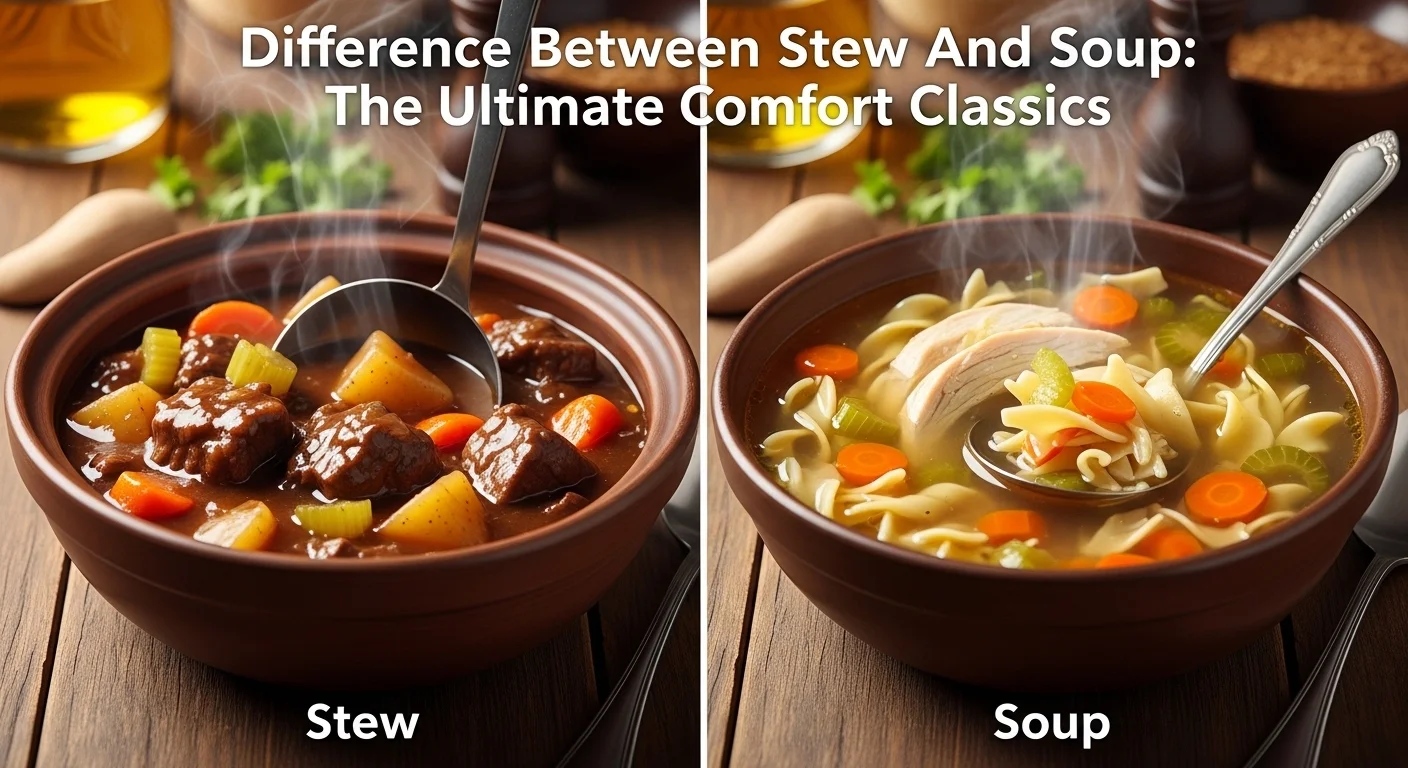
Difference between stew and soup is a common question among food lovers who want to understand the subtle distinctions between these two classic comfort dishes. Both meals are prepared by simmering ingredients such as meat, vegetables, and seasonings in liquid, yet the difference between stew and soup lies in their texture, consistency, and method of preparation. For centuries, these warm and satisfying dishes have been staples in households around the world, offering nourishment, flavor, and a sense of culinary tradition.
When exploring the difference between stew and soup, it becomes clear that each dish serves a slightly different purpose at the dining table. Soups are typically lighter, with more broth and smaller ingredients, making them ideal as appetizers or light meals. In contrast, stews are thicker and heartier, often containing larger chunks of meat and vegetables that create a rich and filling dish. Understanding the difference between stew and soup not only enriches culinary knowledge but also helps home cooks choose the perfect dish depending on the occasion, season, and appetite.
Pronunciation Guide
Soup
- US: /suːp/ (soop)
- UK: /suːp/ (soop)
Stew
- US: /stuː/ (stoo)
- UK: /stjuː/ (styoo)
Now that you can say them correctly, let’s discover what truly separates these beloved dishes.
Difference Between Stew and Soup
Here are ten key distinctions that separate these two comfort foods:
1. Liquid Content
Soup contains much more liquid than solid ingredients. The broth serves as the main element, with vegetables, meat, or grains floating within it.
- 🟣 Chicken noodle soup swims in clear, flavorful broth
- 🟣 Tomato soup is nearly all liquid with smooth texture
Stew uses just enough liquid to cover the solid ingredients. The sauce is thick and acts as a coating rather than a base.
- 🟣 Beef stew features chunks of meat with minimal gravy
- 🟣 Irish stew coats lamb and potatoes with rich, thick sauce
2. Cooking Method
Soup typically simmers ingredients in liquid until flavors blend. The process is gentle and relatively quick.
- 🟣 Vegetable soup simmers for 30-45 minutes
- 🟣 Minestrone cooks until pasta softens in broth
Stew requires long, slow cooking at low temperatures. This breaks down tough meat fibers and creates depth.
- 🟣 Beef bourguignon simmers for 3-4 hours
- 🟣 Osso buco cooks slowly until meat falls off the bone
3. Ingredient Size
Soup uses small, bite-sized pieces that cook quickly and evenly in liquid.
- 🟣 Diced carrots in chicken soup
- 🟣 Small pasta shapes in minestrone
Stew features large, chunky pieces that hold up during extended cooking times.
- 🟣 Big cubes of beef in hearty stew
- 🟣 Whole baby potatoes in lamb stew
4. Thickness and Consistency
Soup ranges from thin and watery to slightly creamy, but always remains pourable.
- 🟣 Consommé is crystal clear and light as water
- 🟣 Butternut squash soup pours smoothly from a ladle
Stew is thick enough that a spoon stands up in it. The sauce clings to ingredients.
- 🟣 Goulash coats the back of a spoon heavily
- 🟣 Brunswick stew has a thick, almost porridge-like quality
5. Serving Temperature
Soup is often served piping hot but can also be enjoyed warm or even chilled.
- 🟣 Gazpacho is served cold on summer days
- 🟣 Vichyssoise tastes best chilled with chives
Stew is always served hot, as the thick sauce becomes unappetizing when cooled.
- 🟣 Beef stew must be steaming to enjoy fully
- 🟣 Chicken cacciatore loses appeal when cold
6. Primary Purpose
Soup often serves as a starter, light meal, or recovery food. It soothes and hydrates.
- 🟣 Chicken soup heals during colds and flu
- 🟣 Miso soup begins Japanese meals gently
Stew functions as a complete, filling main course. It satisfies hunger fully.
- 🟣 Irish stew feeds hungry farmers after hard work
- 🟣 Beef stew replaces an entire dinner plate
7. Thickening Agents
Soup rarely needs thickeners. When used, they are minimal additions.
- 🟣 A touch of cream thickens mushroom soup slightly
- 🟣 Cornstarch gives egg drop soup its silky texture
Stew relies heavily on starches to create body. Flour, potatoes, or reduction create thickness.
- 🟣 Flour-coated beef creates gravy in traditional stew
- 🟣 Potato starch naturally thickens as it cooks
8. Cultural Significance
Soup appears across cultures as a universal comfort food and healing remedy.
- 🟣 Chinese families serve soup daily for health
- 🟣 French onion soup represents Parisian café culture
Stew represents peasant cooking and resourcefulness, making tough cuts delicious.
- 🟣 Hungarian goulash originated with cattle herders
- 🟣 Moroccan tagine reflects North African slow-cooking traditions
9. Nutritional Profile
Soup tends to be lower in calories and higher in hydration. It supports weight management.
- 🟣 Clear vegetable soup offers vitamins with few calories
- 🟣 Bone broth provides minerals and collagen
Stew packs more protein and carbohydrates per serving. It builds energy and strength.
- 🟣 Lamb stew provides iron and protein for active bodies
- 🟣 Bean stew offers fiber and sustained energy
10. Storage and Reheating
Soup stores well and often tastes better the next day as flavors meld.
- 🟣 Minestrone improves after a night in the refrigerator
- 🟣 Chili (soup version) freezes perfectly for months
Stew also stores well but may need liquid added when reheating as sauce thickens further.
- 🟣 Beef stew becomes thicker overnight and needs stirring
- 🟣 Chicken stew may require a splash of stock when warming
Understanding the Nature and Behavior of Each
The Nature of Soup
Soup behaves like a gentle friend. It flows, adapts, and embraces whatever ingredients join it. The liquid nature means soup spreads flavors evenly throughout. Every spoonful tastes consistent. Soup welcomes creativity—you can add ingredients at different stages. It forgives mistakes and rarely burns if watched. Soup serves as a canvas for seasonal vegetables, leftover meats, and cultural spices. It transforms simple ingredients into nourishing bowls of comfort.
The Nature of Stew
Stew acts like a patient builder. It takes time, demands attention early, then rewards you with depth. The thick sauce means flavors concentrate rather than disperse. Each bite offers intense taste. Stew requires commitment—you cannot rush the process. The ingredients must marry slowly. Stew teaches us that good things come to those who wait. It turns economical cuts of meat into tender treasures. Stew represents the alchemy of cooking, where time and technique create magic from humble beginnings.
Why Are People Confused About Their Use?
Many people mix up stew and soup because the line sometimes blurs. Some thick soups resemble thin stews. Cultural variations create confusion—a “stew” in one country might be a “soup” elsewhere. Chili perfectly illustrates this problem. Texans call it stew while others label it soup. Restaurants sometimes misname dishes for marketing purposes. Additionally, modern cooking shows use terms loosely. Home cooks follow family recipes without understanding technical definitions. The confusion grows when cookbooks categorize recipes differently. However, knowing the core differences—liquid ratio, cooking time, and serving purpose—clears the fog. Once you grasp these fundamentals, you can confidently identify any bowl placed before you.
Comparison Table: Stew vs Soup
| Feature | Soup | Stew |
|---|---|---|
| Liquid Amount | High—broth is the star | Low—just enough to cover solids |
| Consistency | Thin to slightly creamy | Thick and hearty |
| Cooking Time | 30 minutes to 2 hours | 2 to 6 hours or more |
| Ingredient Size | Small, bite-sized pieces | Large, chunky portions |
| Serving Role | Starter, light meal, or remedy | Main course, complete meal |
| Temperature | Hot, warm, or cold | Always served hot |
| Thickness | Rarely needs thickening | Requires starches or reduction |
| Calorie Density | Generally lighter | Higher protein and carbs |
| Cultural Role | Universal comfort and healing | Peasant cooking and sustenance |
| Texture | Pourable and smooth | Spoon stands upright in it |
Which Is Better in What Situation?
Choose Soup When:
You need a light start to a meal or want something soothing during illness. Soup works perfectly for lunch on busy days when you want nutrition without heaviness. It suits hot weather when served chilled or cold winter nights when steaming hot. Soup fits weight management plans and hydration needs. When cooking for large groups with varied appetites, soup stretches ingredients economically. It also serves well as a midnight snack that won’t disturb sleep.
Choose Stew When:
You need substantial fuel after physical labor or outdoor activities. Stew satisfies during cold months when the body craves warmth and energy. It works perfectly for dinner parties where you want to impress with minimal last-minute work. Stew suits meal prepping since it holds up for days and freezes beautifully. When feeding teenagers, athletes, or anyone with a hearty appetite, stew fills plates and stomachs completely. It also makes ideal comfort food during emotional times when you need grounding, substantial nourishment.
Metaphors and Similes in Language
Soup Metaphors and Similes:
- 🟣 “Life is like a bowl of soup—you only get what you put into it”
- 🟣 “Her mind was a soup of confused thoughts swirling together”
- 🟣 “The fog lay over the valley like a thick pea soup”
- 🟣 “The city is a cultural soup where everything blends together”
Stew Metaphors and Similes:
- 🟣 “He stewed in his own anger, letting it thicken and deepen”
- 🟣 “The problem stewed in committee for months without resolution”
- 🟣 “Their relationship was a slow stew of resentment building over years”
- 🟣 “Let the idea stew in your mind before making a decision”
Connotative Meanings
Soup Connotations:
- 🟣 Positive: Comforting, healing, nurturing, welcoming, wholesome
- 🟣 Negative: Weak, thin, insubstantial (when describing non-food items)
- 🟣 Neutral: Mixed, blended, liquid
Example: “The soup kitchen fed hundreds of homeless people daily” (positive—caring). “His excuse was pretty thin soup” (negative—unconvincing).
Stew Connotations:
- 🟣 Positive: Hearty, substantial, patient, rich, satisfying
- 🟣 Negative: Stagnant, troubled, anxious (when used as “stewing”)
- 🟣 Neutral: Slow-cooked, concentrated, thick
Example: “She gave a stew of a performance, full of depth and emotion” (positive). “He stewed for hours about the criticism” (negative—worrying).
Idioms and Proverbs
Soup Idioms:
- 🟣 “From soup to nuts” – From beginning to end; everything included
- Example: “The course covers cooking from soup to nuts, teaching every technique.”
- 🟣 “In the soup” – In serious trouble or difficulty
- Example: “When the check bounced, he realized he was really in the soup.”
- 🟣 “Soup up” – To increase power or efficiency (originally from supercharger soup)
- Example: “He souped up his old car until it could race with new models.”
- 🟣 “Souped-up” – Enhanced or modified for better performance
- Example: “The souped-up computer handled complex graphics easily.”
Stew Idioms:
- 🟣 “Stew in your own juices” – To suffer the consequences of your own actions
- Example: “After lying to his boss, he had to stew in his own juices until the truth came out.”
- 🟣 “Let it stew” – To think about something for a long time
- Example: “Don’t answer immediately; let the offer stew for a day or two.”
Literary Works Featuring Stew and Soup
- 🟣 “Stone Soup” – Traditional folktale (genre: folktale, author: various, origin: European, centuries old). This tale teaches cooperation and sharing through villagers adding ingredients to a magical stone soup.
- 🟣 “Like Water for Chocolate” by Laura Esquivel (1989, magical realism). Features recipes including soups that carry emotional power and family tradition.
- 🟣 “Oliver Twist” by Charles Dickens (1838, novel). The famous scene where Oliver asks for more gruel (a thin soup) sparked social reform regarding workhouse conditions.
- 🟣 “The Canterbury Tales” by Geoffrey Chaucer (1392, poetry). References to hearty stews and simple soups reflect medieval English eating habits.
- 🟣 “To Kill a Mockingbird” by Harper Lee (1960, novel). Calpurnia’s cooking, including stews, represents nurturing and moral guidance in the Finch household.
Movies Featuring Stew and Soup
- 🟣 “Ratatouille” (2007, USA). While featuring the vegetable dish, the movie celebrates slow-cooked comfort foods including stews that evoke memory and emotion.
- 🟣 “Babette’s Feast” (1987, Denmark). This Oscar-winning film centers on an elaborate French meal including rich stews and soups that transform a puritanical community.
- 🟣 “Chef” (2014, USA). Features various comfort foods including hearty stews that represent family connection and creative passion.
- 🟣 “Julie & Julia” (2009, USA). Meryl Streep portrays Julia Child mastering French beef bourguignon, the ultimate beef stew, inspiring home cooks everywhere.
- 🟣 “Chocolat” (2000, UK/USA). While focused on chocolate, the film includes scenes of communal soup and stew sharing that break down social barriers.
Frequently Asked Questions
Question 1: Can a soup become a stew?
Yes, if you reduce the liquid significantly or add thickening agents like flour or cornstarch. However, true stew requires specific cooking techniques from the start. Simply thickening soup creates a thick soup rather than authentic stew.
Question 2: Is chili a soup or a stew?
This sparks endless debate. Traditional Texas chili contains no beans and little liquid, making it clearly stew. However, many home versions with beans and more broth blur the line. Most culinary experts classify classic chili as stew due to its thickness and long cooking time.
Question 3: Which is healthier: stew or soup?
Generally, soup contains fewer calories and less fat, making it better for weight management. However, stew offers more protein and sustained energy. The healthiest choice depends on your nutritional needs and activity level that day.
Question 4: Can you make stew in a slow cooker?
Absolutely. Slow cookers excel at stew-making because they maintain low temperatures for extended periods. This breaks down tough meat fibers perfectly. However, brown meat first for best flavor development before adding to the slow cooker.
Question 5: Why does stew taste better the next day?
Stew’s flavors deepen as ingredients rest and meld overnight. The sauce thickens further, and spices distribute more evenly. This resting period allows the complex flavor compounds to fully develop, creating a richer taste experience.
How Are Both Useful ?
Soup and stew serve communities beyond mere nutrition. Soup kitchens worldwide feed homeless populations, offering dignity along with sustenance. Community soup swaps bring neighbors together, sharing heritage recipes and building bonds. During disasters, organizations distribute soup because it nourishes, hydrates, and comforts simultaneously.
Stew traditions preserve cultural heritage. Family stew recipes pass through generations, maintaining connections to ancestral lands. Slow-cooking stews during gatherings encourages conversation and patience in our fast-paced world. Both dishes teach cooking skills to young people, starting with simple soups and advancing to complex stews.
Environmentally, both utilize leftover vegetables and tougher meat cuts, reducing food waste. They demonstrate how cooking transforms humble ingredients into cherished meals. Economically, they stretch proteins to feed more people with less expense. Socially, sharing a pot of soup or stew breaks down barriers between strangers, creating community at the most basic human level.
We have more synonyms for you here…..

Final Words for the Both
Soup and stew represent two sides of culinary wisdom. Soup teaches us that simplicity nourishes. It shows how liquid comfort heals bodies and souls. Soup reminds us to care for the sick, welcome strangers, and find warmth in thin times. It represents the beginning of meals and the start of healing.
Stew teaches us that patience rewards. It demonstrates how time transforms toughness into tenderness. Stew reminds us that substance matters, that slow processes create depth, and that hearty efforts satisfy completely. It represents the main event and the fullness of life.
Together, they form a complete picture of nourishment—light and heavy, quick and slow, healing and sustaining. Master both, and you master the art of caring for others through food.
Conclusion
Understanding the difference between stew and soup enriches your cooking and appreciation of food culture. While soup offers liquid comfort with floating ingredients, stew provides thick, hearty satisfaction with minimal broth. Both serve essential roles in our kitchens and communities. Whether you need a light, healing bowl of chicken soup or a robust, filling beef stew after a hard day, knowing which to choose makes you a more confident cook. These dishes connect us to tradition, nourish our bodies, and bring people together around the table. The next time you stand before your stove, you’ll know exactly which pot to prepare. Learn more….

The author is a Ph.D scholar and has keen interest in what is happening around the world. I love to write, travel and observe. Constant zeal for new ideas is a trigger for me. Love, respect and live peacefully