

🌱 Introduction
Difference between assets and liabilities shapes how people manage money in real life. For example, a young student buys a bike and feels proud. The bike looks like value, so it feels like an asset. However, if the student takes a loan to buy it, that loan becomes a liability. So, the difference between assets and liabilities starts to matter in daily life. In fact, many people miss this point at first. As a result, they face money problems later. Therefore, when you understand the difference between assets and liabilities, you make better choices. Also, this knowledge helps you grow your money. So, learning the difference between assets and liabilities gives you control and confidence.

🔹 Understanding the Difference Between Assets and Liabilities
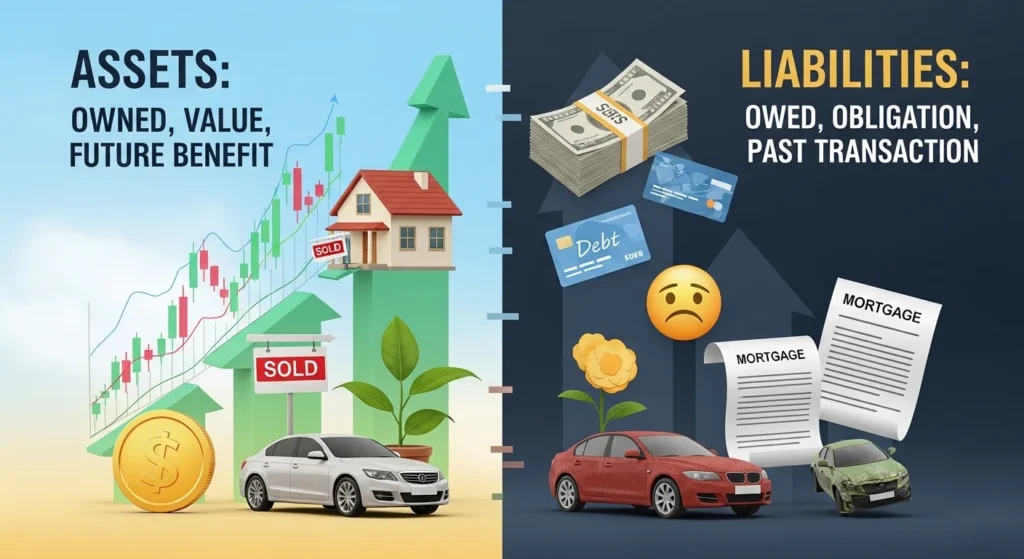
Difference between assets and liabilities means knowing what gives you value and what takes value from you. Assets bring money, support, or benefit. On the other hand, liabilities take money or create burden. For example, a shop that earns profit acts as an asset. However, a loan that needs payment acts as a liability. So, this simple idea helps you see money clearly.
🌍 Why This Difference Matters
This difference helps students, workers, and business owners. First, students learn how to save money. Next, workers plan better spending. Also, business owners track profit and loss. As a result, society grows stronger because people make smart choices. Therefore, everyone should learn this early.
🔊 Pronunciation
- Assets (US): /ˈæs.ets/ | (UK): /ˈæs.ets/
- Liabilities (US): /ˌlaɪ.əˈbɪl.ə.tiz/ | (UK): /ˌlaɪ.əˈbɪl.ə.tiz/
🔗 Let’s Go Deeper
Now that you know the basics, let us explore the real difference with clear and simple examples.
⚖️ Difference Between Assets and Liabilities in Simple Words
Assets give value. Liabilities take value.
Assets help you grow. Liabilities hold you back.
For example:
- A house you rent out = Asset
- A loan for that house = Liability
💼 Difference Between Assets and Liabilities in Daily Life
- Cash in hand helps you = asset
- Debt on card costs you = liability
- A bike for work helps you earn = asset
- Loan for luxury items drains money = liability
- Savings account grows money = asset
- Unpaid bills create stress = liability
- Tools for work support income = asset
- Late fees reduce money = liability
- Books for learning add value = asset
- Borrowed money adds pressure = liability
🏢 Difference Between Assets and Liabilities in Business
- Machines produce goods = asset
- Business loan needs payment = liability
- Stock for sale brings profit = asset
- Rent to pay is a cost = liability
- Office building adds value = asset
- Taxes due create burden = liability
- Brand name builds trust = asset
- Wages to pay cost money = liability
- Customer trust grows income = asset
- Credit dues reduce profit = liability
🎓 Difference Between Assets and Liabilities in Learning
- Skills increase value = asset
- Lack of skills limits growth = liability
- Knowledge builds future = asset
- Poor habits block success = liability
- Training adds power = asset
- Missed chances hurt growth = liability
- Practice builds strength = asset
- Delay harms progress = liability
- Focus builds success = asset
- Distraction wastes time = liability
🎬 Difference Between Assets and Liabilities in Real Examples
- A shop in a movie earns profit = asset
- A hero in debt struggles = liability
- A farmer’s land feeds family = asset
- Loan on land creates stress = liability
- A car for taxi earns money = asset
- Car loan costs money = liability
- Famous brands grow value = asset
- Heavy debt breaks companies = liability
- Tools in a workshop build income = asset
- Broken tools cause loss = liability
🌟 Difference Between Assets and Liabilities in Life Growth
- Good health supports work = asset
- Poor health adds cost = liability
- Strong network helps growth = asset
- Bad company harms life = liability
- Time use builds success = asset
- Time waste blocks progress = liability
- Positive thinking builds energy = asset
- Negative thinking drains energy = liability
- Good habits create success = asset
- Bad habits create loss = liability
🤔 Why People Feel Confused
People see value on the surface. However, they miss long-term impact. For example, a car looks like an asset. But if it only costs money, it becomes a liability. So, confusion starts when people ignore cash flow.
🔍 Difference and Similarity
Assets and liabilities both relate to money. However, assets bring value, while liabilities take value. Still, both help you understand your financial position. More on differences.
🎯 Which Word Fits Better?
Use asset when something gives benefit or income.
Use liability when something takes money or creates duty.
🎨 Metaphors and Similes
- Asset acts like a tree that gives fruit
- Liability acts like a hole that drains water
- Asset shines like light
- Liability feels like a weight
🌈 Connotative Meanings
- Asset → positive (growth, value)
- Liability → negative (burden, loss)
- Neutral use → accounting terms
🧩 Idioms
- “A great asset to the team”
- “A liability in tough times”
❓ FAQs
1. What is the main difference?
Assets give value. Liabilities take value.
2. Can something be both?
Yes, based on use.
3. Is a house an asset?
Yes, if it earns money.
4. Is debt always bad?
No, but it needs control.
5. Why learn this?
It helps manage money better.
🌐 Real-World Use
People use these words in business, study, and daily talk. They help in planning money and making smart decisions.
🔎 Search Terms
- meaning of assets and liabilities
- examples of assets
- examples of liabilities
- difference between assets and debts
- simple finance terms
💬 Final Words
Assets build your future. Liabilities test your control. Choose wisely.
🧾 Conclusion
Understanding the difference between assets and liabilities changes how you see money. First, you learn what adds value. Then, you see what takes it away. As a result, you make better choices. Also, this helps you grow step by step. So, keep learning and apply this in daily life. In the end, smart thinking leads to strong financial health. Read more.

The author is a Ph.D scholar and has keen interest in what is happening around the world. I love to write, travel and observe. Constant zeal for new ideas is a trigger for me. Love, respect and live peacefully